Telephone
02-77093611
Line
@fdlaw
address
17th Floor, No. 180, Section 2, Dunhua South Road, Da'an District, Taipei City
Telephone
02-77093611
Line
@fdlaw
address
17th Floor, No. 180, Section 2, Dunhua South Road, Da'an District, Taipei City

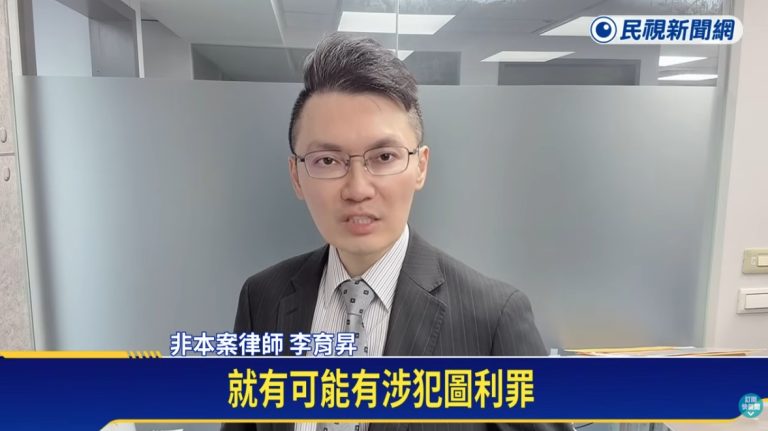
Is Ko Wen-je facing another case? The demolition of the Zhongxiao Bridge approach road is suspected of involving bribery; the Taipei District Prosecutors Office is investigating. | FTV News Reporter Huang Guocheng News Link: Ko Wen-je, the founding chairman of the Taiwan People's Party, was sentenced to 17 years in prison in the first instance for corruption; there may be more unexploded bombs to come. Last week, the Agency Against Corruption summoned witnesses to investigate the Ko government's "Zhongxiao Bridge approach road demolition project." The witnesses' petitions have now been released, directly pointing out that the construction methods did not match the tender specifications. The safer but more expensive "cutting method" was changed to a cheaper but dangerous "breaking method," reducing the project cost from NT$310 million to less than NT$30 million. The Taipei District Prosecutors Office is also investigating this case. Fuda Law Firm…
Last Updated: November 5, 2025 | Author: Attorney Li Yusheng (Lead Attorney at Fidelity Law Firm / Guest Legal Commentator for Political Talk Shows) Foreword: That Subpoena almost ruined his 20-year public service career. "Attorney, I really didn't take any money. I just wanted to finish the project quickly..." This was the first thing Section Chief Zhang (pseudonym) said to us, trembling, when he first came to Fidelity Law Firm. Section Chief Zhang is a senior civil servant who has served in the public works sector for over 20 years. Worried that the project would be delayed due to the typhoon season and cause flooding, he verbally agreed to the contractor changing the construction methods without completing the design change procedure. Although the project was completed on schedule, the contractor saved some costs, and Section Chief Zhang was subsequently investigated…

Anti-Corruption Act | Profiteering Offense | Defense Against Corruption Cases Involving Civil Servants Last Updated: October 31, 2025 | Author: Attorney Li Yusheng (Leading Attorney at Fidelity Law Firm / Guest Legal Commentator for Political Talk Shows) When civil servants receive a summons from the Anti-Corruption Agency, the Investigation Bureau, or prosecutors, their biggest fear isn't being questioned, but rather saying the wrong thing before even understanding the case. Many civil servants, who haven't accepted bribes or kickbacks and are simply acting in accordance with administrative procedures for the convenience of the public, are suddenly suspected of profiteering offenses under the Anti-Corruption Act. The difference between profiteering offenses and administrative negligence often lies only in whether there was "knowing violation of the law" and "whether they or a third party obtained illegal benefits." If you or your relatives have received a summons and been notified to appear before the Anti-Corruption Agency or the Investigation Bureau, it is recommended that you calmly preserve your information…

Last updated: September 28, 2025 | By: Attorney Li Yusheng (Fidelity Legal Host/Guest Legal Commentator on Political Talk Shows) The key to successfully defending an acquittal in corruption cases lies in Taiwan. Corruption cases are strictly regulated by the Anti-Corruption Act. Accused of accepting or offering bribes carries severe penalties, potentially exceeding five years or even life imprisonment. However, many cases suffer from insufficient evidence, misapplication of the law, or disputes over the identification of civil servants. Our law firm consistently achieves acquittals in these cases due to our precise understanding of the legal issues and litigation strategies. The following are the keys to our success: 1. "Identification of Civil Servants" is the primary issue. According to the Anti-Corruption Act, the perpetrator must possess "civil servant" status...

Corruption Cases | The "Big Reservoir Theory" | The "Use of Public Funds for Public Purposes" Defense Last Updated: August 15, 2025 | Author: Attorney Li Yusheng (Focusing Attorney at Fidelity Law Firm / Guest Legal Commentator for Political Talk Shows) The core of the "big reservoir theory" in corruption cases is not just a slogan, but rather using evidence of fund flows, receipts, and official uses to prove that no embezzlement occurred. When public officials, elected representatives, assistants, agency staff, or business owners are suspected of involvement in the Anti-Corruption Act, prosecutors typically investigate whether funds were used for private purposes, whether bribes were received, profits were obtained, or illegal gains were made. The key to the validity of the "big reservoir theory" lies in the use of public funds for public purposes, overall balance of income and expenditure, and a reasonable connection between expenditures and official duties. If you are currently facing investigation by the Agency Against Corruption, the Investigation Bureau, or the District Prosecutor's Office, or have already been searched, questioned, etc…

Lawyers in Civil Servant Corruption Cases Offer a Survival Guide for Under Investigation. When unexpectedly summoned for an interview or search by prosecutors and investigators, most civil servants panic. According to the Supreme Court's ruling in 2011, "Even if a civil servant accepts property, even if it does not violate their duties, it may still constitute a crime under Article 5, Paragraph 1, Clause 3 of the Anti-Corruption Act." Finding the right lawyer can be crucial in influencing the outcome of the case. Three types of corruption charges you may face: 1. Seeking profit (Article 6 of the Anti-Corruption Act); 2. Accepting bribes (Article 5 of the Anti-Corruption Act); 3. Bribery (Article 122 of the Criminal Law). Seven steps you must take immediately before being interviewed by prosecutors and investigators: 1. Immediately invoke your right to remain silent; 2. Carefully review the list of seized items; 3. Completely disconnect from social media apps...