Telephone
02-77093611
Line
@fdlaw
address
17th Floor, No. 180, Section 2, Dunhua South Road, Da'an District, Taipei City
Telephone
02-77093611
Line
@fdlaw
address
17th Floor, No. 180, Section 2, Dunhua South Road, Da'an District, Taipei City

Our firm is a professional Taipei law firm that specializes in corporate legal advisory services. Our senior lawyers have been selected as the best Taipei lawyers to recommend. Our corporate legal advisor team has 20 years of practice experience and rich practical experience. Our team members are from Taipei Legal Each firm has its own areas of specialization, specializing in corporate legal counsel, legal consulting, commercial lawyer negotiation services, civil litigation, criminal litigation, investigation and defense, etc. Team members work together to fight for the best rights and interests of clients.

When a company discovers that its purchasing manager or employee is suspected of receiving kickbacks from suppliers, the most important first step is usually not to immediately confront the employee, nor to decide whether to sue for breach of trust or embezzlement, but rather to preserve evidence. The real questions to investigate in purchasing kickback cases are: What purchasing authority did this employee originally have? Why did the supplier pay him? Did the purchase price increase as a result? Did the company lose discounts or better terms it could have obtained? Were there any false quotes, false invoices, inflated prices, or related-party transactions? Did the kickback ultimately flow to the employee, their relatives, or other companies? Confronting too early might result in the deletion of LINE messages, emails, quotation materials, or supplier records; filing a lawsuit based solely on a single private transfer might also fail due to a lack of evidence…

If a company's head, director, or executive suddenly receives a notification from the investigation bureau, the first thing they should do is not rush to guess what crime they have committed, nor rely solely on memory to give a statement. Instead, they should first confirm their legal status, the transactions or events under investigation, whether other executives have been questioned, and whether contracts, ledgers, bank statements, emails, and company decision-making records corroborate each other. If the company has already been searched, they should immediately confirm the scope of the search, which mobile phones, computers, ledgers, and company documents were actually seized, and whether they might be directly transferred to the district prosecutor's office for further questioning. These types of corporate and white-collar criminal cases typically involve more than just reviewing a single document; they require cross-referencing decision-making processes, transaction purposes, accounting records, fund flows, and statements from relevant personnel. Therefore, the earlier original data is preserved and a timeline established…

The core of commercial accounting law cases is not "a crime is committed simply because the accounts are wrong," but rather determining whether accounting vouchers, ledgers, or financial statements do not match actual transactions, and whether relevant personnel knowingly created, recorded, used, or intentionally omitted false information. Whether company leaders, accountants, or those entrusted with accounting matters are criminally liable cannot be determined solely by their professional titles; it requires comparing actual transactions, the source of vouchers, accounting procedures, bank flows, decision-making processes, and the individual's subjective understanding. What does Article 71 of the Commercial Accounting Law primarily punish? The current Article 71 of the Commercial Accounting Law targets commercial leaders, principal and managing accountants, and those legally entrusted to handle accounting matters for others, regulating those who knowingly prepare accounting vouchers or record false information in ledgers, or intentionally cause financial statements to show discrepancies…

Overseas orders, export contracts, and international trade risks: Before signing, confirm the terms of overseas orders. Don't just look at the purchase order and amount; payment, delivery, acceptance, risk transfer, governing law, and dispute resolution clauses all affect subsequent recovery. For high-volume exports, new customers, partial deliveries, or cross-border payment arrangements, the contracting parties, payment parties, receiving parties, and agency relationships should be confirmed first. If overseas customers default on payments, whether the contract clearly states jurisdiction, arbitration, place of payment, and supporting documentation will directly affect the actual recovery rate. Overseas orders are not safe just because there is a purchase order; international trade risks must be controlled before shipment. When Taiwanese companies receive overseas orders, they most easily look at the order amount, customer background, and delivery date. However, in international trade, the real risk is often not whether production is possible, but rather…

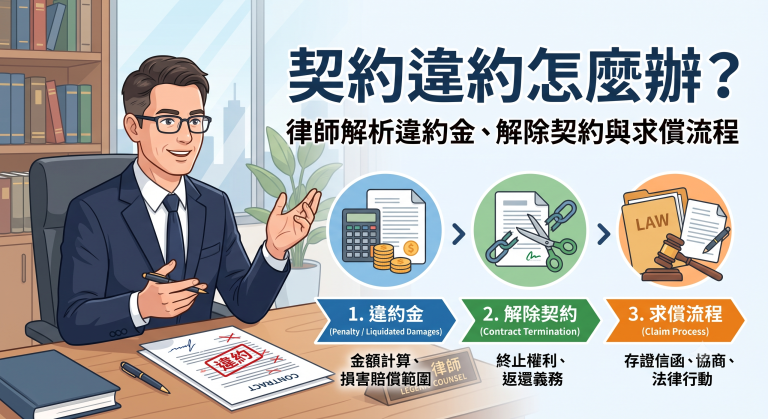
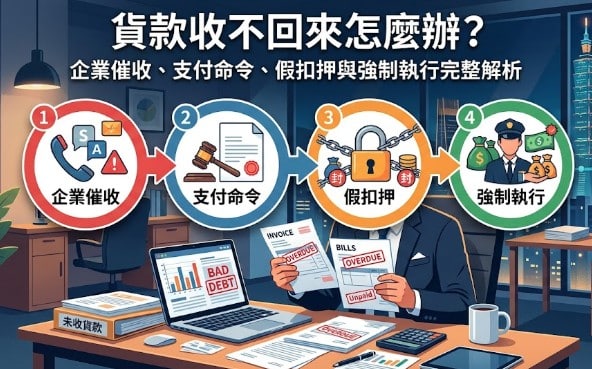
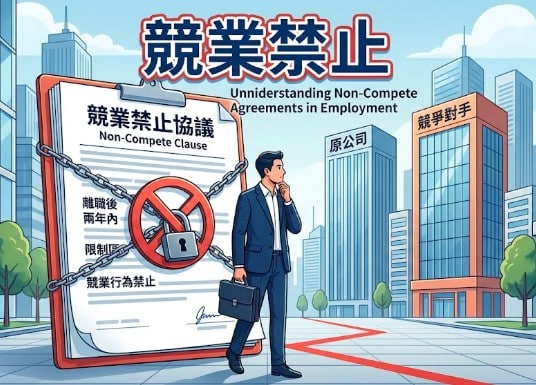


This article provides a quick summary of the key points: (I) What is a corporate legal counsel? Why do SMEs need one more than large enterprises? (II) Common legal risks in business operations and related regulations (III) How can businesses in Taipei, New Taipei, Taoyuan, and Hsinchu accurately select a legal counsel? (IV) Specific action steps for businesses to hire a legal counsel. The following addresses the most frequently asked questions (FAQs) about legal counsel for business owners in the Greater Taipei (Taipei, New Taipei), Taoyuan, and Hsinchu areas, providing professional answers combining current Taiwanese regulations and Supreme Court practical insights to help you build a legal moat for your business with the clearest steps. I. Why do SMEs need a dedicated corporate legal counsel? (I) Prevention is better than cure in corporate legal strategy…

Does a company need a legal counsel? The key isn't to only hire a lawyer when there's a problem, but to mitigate risks beforehand. Companies in Taipei, New Taipei, Taoyuan, and Hsinchu often encounter issues during their growth, such as contract review, labor disputes, shareholder disputes, board and corporate governance, trademarks and trade secrets, accounts receivable, and commercial litigation. The value of a corporate legal counsel lies in helping companies clarify transaction processes, contract terms, and legal risks before problems escalate into litigation. Taipei Corporate Legal Counsel, New Taipei Business Legal Counsel, Contract Review Lawyer, Business Lawyer, Corporate Legal Counsel 02-7709-3611 LINE Consultation In which situations is it advisable to have a lawyer review the contract first? When a company starts signing larger contracts, procurement contracts, distribution or agency agreements, etc…

Partnership and shareholder disputes are most problematic when dealing with unclear accounts and ambiguous rights, ultimately leading to the loss of one's initial investment. Partnerships often begin with trust, but once issues arise such as unequal profit distribution, unclear accounts, refusal to audit by the responsible party, partner misconduct, or the inability to recover funds after withdrawal, the matter transcends mere emotional issues. It becomes a complex issue involving the partnership agreement, the right to audit, withdrawal settlement, return of investment, and civil and criminal liability. Partnership Dispute Lawyer: Withdrawal Settlement, Right to Audit, Profit Distribution, Shareholder Disputes 02-7709-3611 LINE Consultation When is it advisable to consult a lawyer first? When a partner refuses to provide accounting books, bankbooks, sales records, or financial data; when wanting to withdraw or dissolve the partnership, but the other party is unwilling to settle accounts, return investment, or there is unequal profit distribution, misappropriation of funds, or suspected…