Telephone
02-77093611
Line
@fdlaw
address
17th Floor, No. 180, Section 2, Dunhua South Road, Da'an District, Taipei City
Telephone
02-77093611
Line
@fdlaw
address
17th Floor, No. 180, Section 2, Dunhua South Road, Da'an District, Taipei City

Our firm is a professional team of criminal litigation lawyers, composed of a group of criminal lawyers in Taipei, specializing in criminal litigation, criminal prosecution agency, criminal investigation defense, criminal defense in trial proceedings, police interrogation accompaniment, investigation accompaniment, police inquiry, investigation accompaniment, and detention court The senior lawyer has 20 years of experience in defense, bail application, appeal, and debate strategy planning. He has rich practical experience and strives for the maximum legal rights and interests of his clients.

News Headline: Domestic Abusive Man Kills Wife, Sister-in-Law Escapes and Dies; New Taipei District Court: Death Sentence Required for Killing 3 People Media Source: ETtoday News Reporter: Zhao Yijie News Link: News Summary According to ETtoday News, a man in Tucheng District, New Taipei City, killed his wife and sister-in-law in May 2025 and was sentenced to two life sentences in the first instance. The report relayed that the New Taipei District Court offered a case-by-case interpretation of the "most serious circumstances of the crime" and "killing multiple people" requirements for a death sentence, believing that "multiple people" must be at least three, which sparked dissatisfaction from the victim's family regarding the sentencing result. This controversy involves how to apply the Constitutional Court's 113th year Constitutional Judgment No. 8 to a case-by-case basis, and cannot be based solely on…

News Headline: "Sunflower Movement Queen" Liu Qiaoan Accused of Smuggling Cocaine, Transporting a Class I Narcotic Drug, Could Face Death Penalty Media Source: FTV News Reporters: Li Yuhan, Ye Yansheng News Link: News Summary According to FTV News, Liu Qiaoan was indicted by prosecutors after being extradited back to Taiwan. Prosecutors accuse her of participating in a transnational drug trafficking ring, acting as an intermediary for Taiwanese buyers, and smuggling cocaine into Taiwan by air using candles. The report indicates that the New Taipei District Prosecutors Office is pursuing charges including transporting a Class I narcotic. The above content pertains to the prosecution's accusations; whether a crime has been committed and the final sentence will still need to be determined by the court based on the evidence. Attorney Li Yusheng explains Fidelity Law…

News Headline: Internet Celebrities' Candidacy for Neighborhood Chief or Councilor Sparks Controversy! Livestream Donations of NT$10,000 to the Underprivileged Raise Legal Questions, Lawyer Says It May Constitute Bribery Media Source: SET News Reporter: Yu Tao News Link: News Summary According to SET News, the candidacy of internet celebrities Binbin Ge and AJ Ge for neighborhood chief or councilor has attracted attention. Their actions of donating cash to the underprivileged during livestreams have also raised questions about whether it constitutes bribery. The report interviewed lawyer Li Yusheng to explain the legal risks; whether the donations are purely charitable assistance or related to winning votes still needs to be determined based on the actual content of the activity and evidence. Lawyer Li Yusheng's Explanation Li Yusheng, a lawyer from Fidelity Law Firm, explained in the news…

News Headline: Exclusive: Drunk Man Drives Out of Parking Lot to Wait for Designated Driver – Is That Drunk Driving?! He Even Slapped a Police Officer in the Face. Media Source: ETtoday News Reporter: ETtoday News Interview Team News Link: News Summary According to ETtoday News, a man in Taipei, after drinking, attempted to drive his car out of a parking lot to wait for a designated driver. However, because he hadn't paid the parking fee and the gate wouldn't open, he kicked the management office door. After the manager called the police, the man was accused of slapping a police officer in the face and was taken into custody. The incident raised the question of whether "moving a car in a parking lot without actually driving on the road still constitutes drunk driving." Lawyer Li Yusheng Explains: Lawyer Li Yusheng of Fidelity Law Firm explained in the news report that even if a car is moved while intoxicated, it still constitutes drunk driving…

Being able to log into your former company's ERP, CRM, Google Workspace, Microsoft 365, email, cloud storage, or server after leaving a job does not necessarily mean you still have the legal right to access them. Conversely, the presence of login records or downloaded files on the company system does not necessarily constitute a criminal offense. These cases truly need to be examined as two separate issues. The first issue is "system access": Did you still have authorization from the company after leaving? Did you actively enter your account and password to log in, or did your original browser session, sync program, or device maintain the login? What data was actually obtained, downloaded, modified, or deleted? The second issue is "data..."

When a company discovers that its purchasing manager or employee is suspected of receiving kickbacks from suppliers, the most important first step is usually not to immediately confront the employee, nor to decide whether to sue for breach of trust or embezzlement, but rather to preserve evidence. The real questions to investigate in purchasing kickback cases are: What purchasing authority did this employee originally have? Why did the supplier pay him? Did the purchase price increase as a result? Did the company lose discounts or better terms it could have obtained? Were there any false quotes, false invoices, inflated prices, or related-party transactions? Did the kickback ultimately flow to the employee, their relatives, or other companies? Confronting too early might result in the deletion of LINE messages, emails, quotation materials, or supplier records; filing a lawsuit based solely on a single private transfer might also fail due to a lack of evidence…

News Headline: Nephew Stabbed to Death While Protecting Parents in Inheritance Dispute; Uncle Ordered to Pay Over NT$10 Million in Damages Media Source: TTV News Reporter: Tsai Hsin-yu News Link: News Summary News video reports that in a family inheritance dispute, a nephew was stabbed to death while protecting his parents. The court ordered the perpetrator to pay over NT$10 million in damages. The case involves criminal liability and death damage compensation, but the specific details of the judgment, the proportion of liability, and the calculation of compensation should be based on the court's ruling. Lawyer Li Yu-sheng explains that if a person attacks another person with a knife or other means, resulting in death, criminal liability will be determined based on the subjective intent, the location and force of the attack, the actions before and after the conflict, and the causal relationship…

If a company's head, director, or executive suddenly receives a notification from the investigation bureau, the first thing they should do is not rush to guess what crime they have committed, nor rely solely on memory to give a statement. Instead, they should first confirm their legal status, the transactions or events under investigation, whether other executives have been questioned, and whether contracts, ledgers, bank statements, emails, and company decision-making records corroborate each other. If the company has already been searched, they should immediately confirm the scope of the search, which mobile phones, computers, ledgers, and company documents were actually seized, and whether they might be directly transferred to the district prosecutor's office for further questioning. These types of corporate and white-collar criminal cases typically involve more than just reviewing a single document; they require cross-referencing decision-making processes, transaction purposes, accounting records, fund flows, and statements from relevant personnel. Therefore, the earlier original data is preserved and a timeline established…

When a company discovers that money is missing, the most common question is: "Is this embezzlement or breach of trust?" For example, a salesperson might receive payment from a customer but fail to return it to the company; a finance staff member might transfer funds from the company account to their own; a company executive might transfer funds to a related company; or a director might conduct a transaction with terms clearly unfavorable to the company. Superficially, these all appear to constitute "damage to company assets," but the legal judgments may differ. The truly important first question isn't choosing a charge, but rather: "Who originally held this property based on a business relationship? Did the perpetrator subsequently convert the company property they originally held into their own, or did they abuse their position of authority to conduct a transaction contrary to their duties?" This is usually the starting point for distinguishing between business embezzlement and breach of trust. I. Business…

First, establish clear permissions, cash flow, documentation, and transaction purposes before deciding on the next steps. When a company discovers unusual withdrawals from its accounts, customers have made payments but the company hasn't received them, supervisors have transferred funds to their own or related parties' accounts, or discrepancies exist between accounting records and bank statements, the first step is usually not to immediately summon the other party for questioning, nor to assume a crime based solely on a single unusual remittance. In corporate criminal cases, the first step should be to establish clear permissions, cash flow, documentation, and transaction purposes. This includes: bank transaction details, online banking and withdrawal records; accounting vouchers, general ledger and subsidiary ledgers; invoices, payment requests, quotations and contracts; legally held company communication devices such as email, LINE, and WhatsApp; payment records, online banking documents, company seals, and approval processes; and customer and supplier records…

First, reconstruct the entire transaction; don't just look at whether the company lost money. When a company's head, director, or senior executive is accused of breach of trust, the first thing to do is not simply ask, "Did the company really lose money?", but to reconstruct the entire transaction. Corporate criminal cases often involve authority, contracts, accounting, bank flows, and internal decision-making simultaneously; you can't judge based on just a remittance or an accounting voucher. Who proposed and made this decision? What position and authority did they hold at the time? Was there authorization from the board of directors, shareholders' meeting, executives, or others? What was the purpose of the transaction and what were the expected company benefits? Where did the funds ultimately flow? Did the individual or a third party gain any benefit? What is the actual damage claimed by the company? What contracts, emails, LINE messages, accounting records, and bank records can prove the background of the decision-making process…
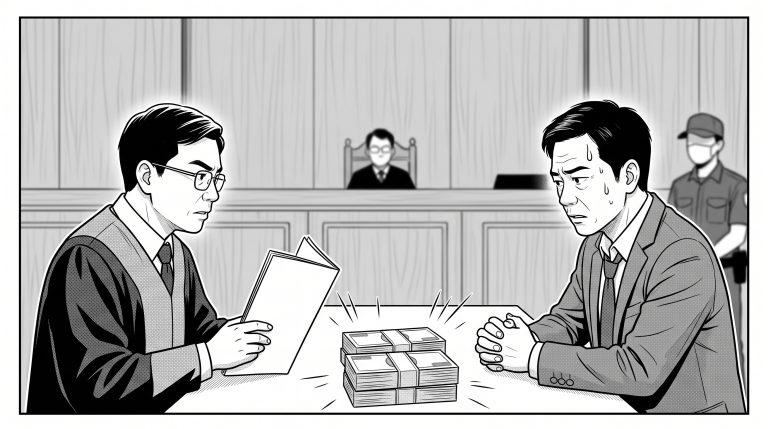
Upon receiving an indictment for fraud, money laundering, or nominee accounts, don't just look at the charges, the prosecutor's sentencing recommendations, or the last page of the indictment. The indictment means the case will be heard in court. What truly influences the preparation for the first trial is how the prosecutor combines the facts of the crime, the defendant's role, the flow of funds, and communication evidence. After receiving the indictment, you should immediately check each item: the facts of the crime identified in the indictment, the defendant's identified role, the evidence cited by the prosecutor, how the flow of funds is interpreted, how the communication records are interpreted, whether it's a guilty plea, and the scope of the guilty plea. Which facts are still in dispute? Is there any important evidence yet to be presented? The earlier you compare the indictment with the case file, the better you can avoid discovering crucial information that wasn't organized, discrepancies in previous statements, or the prosecutor's interpretation of the defendant's role only during the first preparation stage or on the trial date…