Telephone
02-77093611
Line
@fdlaw
address
17th Floor, No. 180, Section 2, Dunhua South Road, Da'an District, Taipei City
Telephone
02-77093611
Line
@fdlaw
address
17th Floor, No. 180, Section 2, Dunhua South Road, Da'an District, Taipei City

Fidelity Law Firm is a professional commercial law firm. It serves as legal counsel for many large listed companies and small and medium-sized enterprises. It has close business cooperation with many insurance companies and specializes in corporate law, bill law, maritime law, and insurance law. , business secrets law, insurance claims disputes, company labor disputes, life insurance, marine insurance, etc. The group of senior lawyers has 20 years of practice experience and rich practical experience. Team members work together to fight for the best rights and interests of clients.

When companies encounter commercial disputes and litigation, the first and most common question is, "Can I sue?" But the real question should usually be not whether a lawsuit can be filed, but what the company ultimately wants to achieve. Is it to recover payment? Demand continued performance of the contract? Terminate the cooperation? Stop the other party from using the technology or data? Claim liquidated damages and compensation? Or has the other party already filed a lawsuit, and the company now needs to submit a full response within the court's time limit? When the same contract or cooperation breaks down, there may be options for negotiation, sending letters, mediation, payment orders, injunctive relief, civil litigation, arbitration, or other procedures. A truly effective commercial litigation strategy is not to use every legal tool imaginable, but to first consider the business objectives, the strength of the evidence, the amount of compensation sought, the other party's assets, and…

First, obtain the information, reconstruct the transactions, and then decide on legal measures. "I know the company has revenue, but it claims to have no profit every year; they won't let us see the books; the company keeps transferring money to related companies; and the personal expenses of the person in charge seem to be borne by the company." In this situation, the most important thing for shareholders is not to immediately label it as "embezzlement" or "breach of trust," but to first obtain enough information to reconstruct the company's transactions and cash flow. This includes: the company's type and your own shareholder status; your shareholding status and actual management control; what information the company is currently willing to provide; which books or bank records are unavailable; the period, amount, and parties involved in the suspicious transactions; which related parties or companies are involved; how much money the company paid and what it actually received; whether it was approved by the board of directors, shareholders' meeting, or internally; and the company's claimed transactions…

Overseas orders, export contracts, and international trade risks: Before signing, confirm the terms of overseas orders. Don't just look at the purchase order and amount; payment, delivery, acceptance, risk transfer, governing law, and dispute resolution clauses all affect subsequent recovery. For high-volume exports, new customers, partial deliveries, or cross-border payment arrangements, the contracting parties, payment parties, receiving parties, and agency relationships should be confirmed first. If overseas customers default on payments, whether the contract clearly states jurisdiction, arbitration, place of payment, and supporting documentation will directly affect the actual recovery rate. Overseas orders are not safe just because there is a purchase order; international trade risks must be controlled before shipment. When Taiwanese companies receive overseas orders, they most easily look at the order amount, customer background, and delivery date. However, in international trade, the real risk is often not whether production is possible, but rather…

When reviewing OEM, ODM, and contract manufacturing contracts, the real focus should be on risk allocation. Contract manufacturing contracts shouldn't just state the price and delivery date; specifications, acceptance procedures, liability for defects, delivery delays, confidentiality, and intellectual property ownership all need to be specified. The client and the contract manufacturer have different perspectives, leading to different focuses in contract review; the transaction model should be confirmed first before deciding on the terms. When mold development, design deliverables, overseas orders, bulk purchasing, brand licensing, or trade secrets are involved, a business lawyer's review is recommended before signing. Contract manufacturing contracts are not just about quotes and delivery dates; the real risks lie in the details. Common contract manufacturing collaborations for Taiwanese companies include OEM, ODM, component processing, electronics manufacturing, food contract manufacturing, cosmetics contract manufacturing, machinery processing, and brand contract manufacturing. Very…


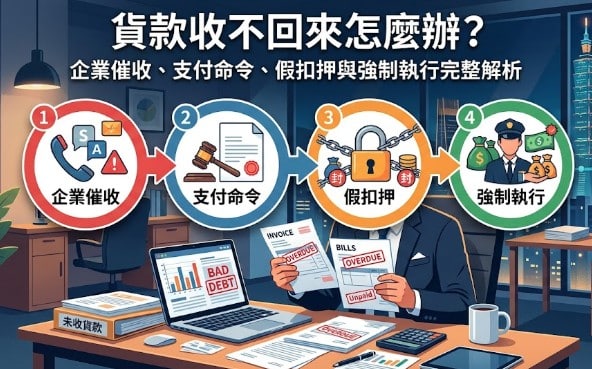
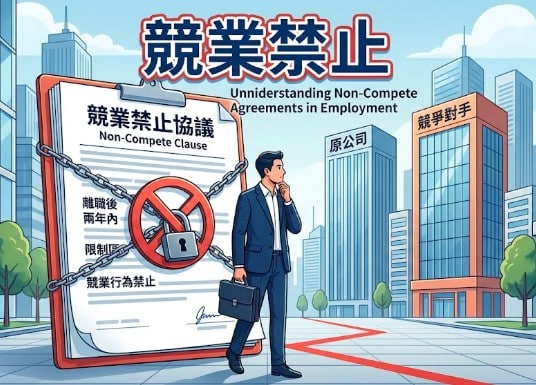


Partnership and shareholder disputes are most problematic when dealing with unclear accounts and ambiguous rights, ultimately leading to the loss of one's initial investment. Partnerships often begin with trust, but once issues arise such as unequal profit distribution, unclear accounts, refusal to audit by the responsible party, partner misconduct, or the inability to recover funds after withdrawal, the matter transcends mere emotional issues. It becomes a complex issue involving the partnership agreement, the right to audit, withdrawal settlement, return of investment, and civil and criminal liability. Partnership Dispute Lawyer: Withdrawal Settlement, Right to Audit, Profit Distribution, Shareholder Disputes 02-7709-3611 LINE Consultation When is it advisable to consult a lawyer first? When a partner refuses to provide accounting books, bankbooks, sales records, or financial data; when wanting to withdraw or dissolve the partnership, but the other party is unwilling to settle accounts, return investment, or there is unequal profit distribution, misappropriation of funds, or suspected…

Li Yang, the first Minister of Sports, lost his 30 million endorsement fee: Completed compliance procedures | CTS News reporter Xu Tinglun News link: The Executive Yuan announced the personnel case of the newly established Minister of Sports yesterday (27th). The first Minister of Sports in Taiwan's history will be Li Yang, the two-time Olympic badminton gold medalist. As soon as the news came out, all walks of life paid close attention. Li Yang had a good image and had many endorsements in the past. Now, in order to avoid commercial disputes, he has to give up commercial cooperation. According to estimates, the loss may be at least 30 million! In response to this, Li Yang issued a statement, saying that he was grateful for the concern of the outside world and that he had completed all compliance procedures. Fidelity Law Firm...

A renowned surgeon is accused of fraudulent surgery, and a patient has filed a lawsuit. Three tumor surgeries have raised numerous questions. A renowned surgeon in Gengshen County is facing a medical dispute, alleging false information about the surgery. A patient is accusing the surgeon of falsifying medical records to defraud patients of surgery. (Reporters Xu Zhaowei and Nian Wanxuan) News link: Attorney Li Yusheng of Fidelity Law Firm stated that if a physician falsely provides a patient with a diagnosis in exchange for medical fees, a medical dispute may arise, potentially implicating him in the crime of fraud under the criminal law. Furthermore, physicians have an obligation to fully explain surgical procedures to patients. Failure to fulfill this obligation could result in civil liability for damages if the patient suffers harm during surgery, and in serious cases, could lead to professional negligence.