Telephone
02-77093611
Line
@fdlaw
address
17th Floor, No. 180, Section 2, Dunhua South Road, Da'an District, Taipei City
Telephone
02-77093611
Line
@fdlaw
address
17th Floor, No. 180, Section 2, Dunhua South Road, Da'an District, Taipei City


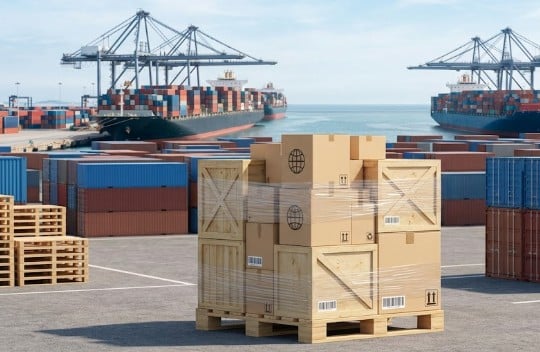
When Taiwanese companies receive overseas orders, they are most likely to first look at the order amount, the customer's background, and the delivery date. However, in international trade, the real risks are often not whether production is possible, but rather not being able to collect payments, having defects found after goods arrive, misunderstandings of delivery terms, delays in sea and air freight, exchange rate fluctuations, export controls, unclear applicable laws, or not knowing in which country to file a lawsuit after a dispute arises.
Many companies mistakenly believe that having purchase orders, quotations, and email confirmations equates to a secure contract. In reality, the most crucial aspect of cross-border transactions is clearly defining payment terms, delivery terms, acceptance criteria, defect notification, transfer of title and risk, force majeure, governing law, and the jurisdictional court or arbitration mechanism. If a payment dispute has already arisen, consider... pursuing unpaid trade receivables in Taiwan separately from pre-contract risk planning.
When Fidelity Law Firm assists companies with overseas orders, export contracts, international trade disputes, and cross-border business risks, they begin by examining the transaction process, rather than just looking at the final contract text. This is because the risks in international trade typically accumulate from quotation, samples, payment, shipment, acceptance, to after-sales service.
A common problem in overseas transactions is that the negotiating party, the company placing the order, the payment account, and the receiving company are not the same entity. The business contact might be an agent, the purchase order comes from an overseas company, but payment is made through a third-party account, and the delivery location is in another country. This arrangement may not be illegal, but if it's not clarified, seeking compensation later will be extremely difficult.
Before accepting overseas orders, you should verify the other party's company name, registration information, business address, contracted representative, payment account, consignee, and whether there is an agency relationship between the final buyer and the company. If an agent places the order on your behalf, you should verify whether the agent has the authority to represent the final buyer, or whether the agent itself assumes payment responsibility.
Large overseas orders should not be judged solely based on the other party's website or business card at exhibitions. Companies can request company registration information, business credit information, past transaction records, bank information, and end customer background, and reduce risks through methods such as phased shipments, prepayments, letters of credit, or guarantees.
Be wary if the other party initially demands large amounts of credit, specifies unreasonable shipping methods, refuses to provide company information, or uses a non-company name for payment. The larger the overseas order amount, the more important it is to complete basic due diligence before accepting the order.
Common payment methods in international trade include full prepayment, deposit plus balance, prepayment before shipment, payment upon bill of lading, open contract transactions, payment against documents, documents against acceptance, and monthly settlement. Each payment method carries different risks.
For the seller, the safest approach is to receive full payment before shipping, but buyers typically prefer to minimize payment risk. Compromises may include a deposit, payment before production is completed, payment before shipment, or a requirement for an irrevocable letter of credit. The contract should clearly specify the currency of payment, payment terms, remittance costs, interest for late payments, and whether production or shipment can be suspended in the event of non-payment.
If overseas customers fail to pay, Taiwanese companies don't necessarily have to accept their fate. If there are clear contracts, purchase orders, shipping documents, invoices, receipts, reconciliation records, and collection records, they can assess the possibility of sending lawyer's letters, negotiating, arbitrating, litigating, or enforcing judgments in the other party's location.
However, the effectiveness of debt recovery depends on the pre-contract design. The applicable law, the court of jurisdiction, the arbitration clause, the place of payment, the debtor's location, the location of the assets, and whether the other party company is still operating all affect the actual recovery probability.
International trade commonly uses incoterms such as EXW, FOB, CIF, DAP, and DDP. These terms affect freight, insurance, customs clearance, risk transfer, and delivery liability. However, in practice, many contracts only specify FOB Taiwan or CIF buyer port, without specifying the version, port, shipping arrangements, or document responsibilities.
It is recommended to specify the applicable Incoterms version, designated port or location, shipment period, partial shipments, transshipment, insurance liability, export customs declaration, import customs clearance, tax and fee burden, and document submission deadlines. If these details are not clearly stated, it is easy for both parties to shift blame in the event of damage or delays during transit.
Many companies believe that they bear no responsibility once the goods are handed over to the carrier, but this depends on the contract terms, trade conditions, and applicable laws. The transfer of risk does not necessarily equate to the transfer of ownership, and payment terms do not necessarily mean completion of delivery.
If the seller wishes to retain title until full payment is received, a retention of title clause should be clearly stipulated in the contract, and the validity of such a clause in the applicable jurisdiction should be confirmed. If the buyer wishes to assume final responsibility only after acceptance, the acceptance procedure and handling of non-conformities should also be clearly defined.
Overseas orders often involve confirming samples before mass production. However, differences may arise between samples and mass-produced goods due to variations in material batches, process conditions, supplier changes, or packaging and shipping. If the contract lacks specifications, acceptance criteria, and inspection methods, the buyer may later use vague defects to claim non-payment of the final payment or demand substantial discounts.
Export contracts should clearly list product specifications, sample versions, testing standards, certification requirements, packaging markings, inspection period, sampling ratio, and methods for notifying of objections. Whether failure to notify the buyer of specific defects within the stipulated timeframe constitutes acceptance should also be clearly stipulated.
According to Article 356 of Taiwan's Civil Code, after receiving the goods, the buyer should promptly inspect them according to their nature; if any defects are found that should be covered by the seller's warranty, the buyer should immediately notify the seller. Failure to notify is, in principle, considered as acceptance of the goods received. Although cross-border transactions may be governed by foreign law or international conventions, this system reminds businesses that the defect notification period is a crucial mechanism for transaction security.
Sellers should avoid allowing buyers to claim defects on vague grounds months after receiving the goods. Buyers, on the other hand, should preserve evidence and notify the seller immediately upon discovering defects to avoid losing the opportunity to assert their rights.
A common mistake in overseas orders is the complete absence of applicable law and jurisdiction clauses in the contract. When disputes arise, the parties only then begin arguing about which country's law applies, where to file a lawsuit, and whether a judgment is enforceable, often significantly increasing costs.
International trade contracts should specify the governing law, court jurisdiction or place of arbitration, arbitration institution, language, method of service, and validity of document versions before signing. If the other party is located overseas and has assets overseas, simply stipulating Taiwanese court jurisdiction may not be the most advantageous; if the other party has assets or a parent company in Taiwan, Taiwanese jurisdiction may be more practical.
For Taiwanese companies, no single clause is always the best. What truly matters is choosing the most feasible dispute resolution mechanism based on the transaction amount, the other party's location, asset location, negotiating leverage, enforceability, and cost.
In recent years, international trade has moved beyond just contracts; it now considers export controls, sanctions lists, end-use products, dual-use products, technology transfer, payment sources, and anti-money laundering risks. This is especially true for electronic components, machinery and equipment, semiconductor-related products, communication equipment, cybersecurity products, and high-tech materials; companies cannot simply rely on whether customers are willing to pay.
If the transaction involves sensitive countries, entrepot trade, unclear end-users, third-party payments, or the customer refuses to disclose the intended use, a compliance review is recommended before shipment. Contracts can also include provisions for export control compliance, end-use declarations, prohibitions on resale to specific regions, the right to terminate the contract in case of breach, and the customer's obligation to compensate.
International trade risks are not addressed only after the other party defaults on payment, goods are returned, or customers disappear. The most effective risk management involves designing payment, delivery, acceptance, defects, governing law, jurisdiction, and compliance clauses in advance in quotations, purchase orders, order confirmations, contracts, and shipping documents.
Before accepting large overseas orders, businesses are advised to have a business lawyer review the transaction documents. The lawyer can help confirm whether the terms are consistent, whether payment is guaranteed, whether liability for breach of contract is enforceable, whether the dispute resolution mechanism is reasonable, and whether there is sufficient evidence to pursue future payments or claims.
Overseas orders bring revenue, but also cross-border risks. The sooner these risks are translated into clear terms, the better to avoid orders turning into bad debts or lawsuits.
Not every transaction needs a lengthy formal contract, but at a minimum, there should be clear purchase orders, quotations, order confirmations, payment terms, delivery terms, acceptance standards, and dispute resolution clauses. The higher the amount and the more complex the transaction, the more important it is to sign a complete international trade contract.
First, gather all relevant documents, including contracts, purchase orders, invoices, shipping documents, receipts, account statements, and collection records. Then, assess options for legal action, negotiation, arbitration, or litigation. The effectiveness of recovering funds depends on evidence, jurisdictional clauses, the other party's assets, and the likelihood of enforcement.
It is strongly recommended to include this clause. The applicable law affects contract interpretation, liability for breach of contract, notification of defects, damages, and statute of limitations. Without it, disputes may arise, and significant time may be spent arguing about which country's law applies, increasing costs and uncertainty.
This is usually insufficient. The contract should specify the applicable version, the designated port or location, freight, insurance, customs clearance, document submission, partial shipments, and the timing of risk transfer. Simply stating FOB or CIF may still leave room for interpretation disputes.
Export contracts should be reviewed to ensure compliance with the contracting parties, payment terms, delivery terms, acceptance standards, liability for defects, intellectual property rights, confidentiality, export controls, applicable law, jurisdiction, arbitration, penalties for breach of contract, and damages. For high-value orders or new clients, it is recommended to complete the review before signing.
Line:https://line.me/ti/p/@fdlaw
Tel:0277093611
Facebook:https://www.facebook.com/fudalawyer
website:https://fdlaw.com.tw/
e-mail:info@fdlaw.com.tw
