Telephone
02-77093611
Line
@fdlaw
address
17th Floor, No. 180, Section 2, Dunhua South Road, Da'an District, Taipei City
Telephone
02-77093611
Line
@fdlaw
address
17th Floor, No. 180, Section 2, Dunhua South Road, Da'an District, Taipei City


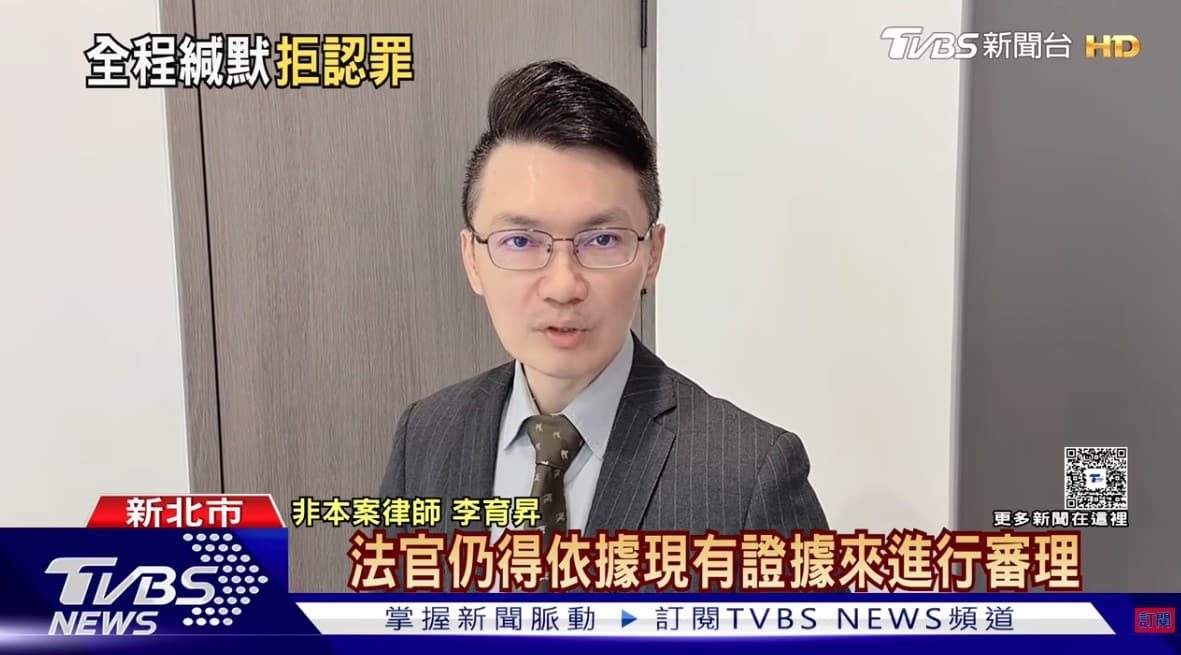
Zhang Shuyuan, accused of murdering his wife and children for insurance fraud, remained silent on all 40 questions during his trial. │ TVBS News Reporter Guo Ying
News link:https://youtu.be/ivU9TUT0Bug?si=0hsZ1GyXTk3E_dcW
The New Taipei District Court's National Court held a series of hearings last month, and Chang Shu-yuan exercised his right to remain silent in the face of as many as forty questions from the prosecutor and judge, setting a precedent for public participation in the trial. However, legal experts analyzed that although he exercised his right to remain silent, the judge will still sentence him based on the relevant evidence, and may even consider his poor attitude after the crime and impose a heavier sentence.
Attorney Li Yusheng of Fidelity Law Firm stated that although defendants are legally entitled to remain silent, judges can still conduct trials based on existing evidence. If the judge reviews the relevant materials and asks questions of the defendant, and the defendant exercises their right to remain silent and does not answer, it is tantamount to giving up the opportunity to defend themselves. The judge must still conduct the trial based on the existing evidence, and if convicted later, the defendant may be given a heavier sentence due to their passive non-cooperation with the trial and poor attitude after the crime.
Fuda Law Firm
Line:https://line.me/ti/p/@fdlaw
Tel:0277093611
Facebook:https://www.facebook.com/fudalawyer
website:https://fdlaw.com.tw/
e-mail:info@fdlaw.com.tw
Yes. The defendant has the right to remain silent under the law, but whether to remain completely silent or to provide only partial information should be determined based on the evidence, the charges, and the litigation strategy.
In theory, the exercise of the right to remain silent should not be used as the sole basis for adverse judgment, but the court will still consider other evidence in its judgment, so a comprehensive defense strategy is necessary.
A lawyer can help you understand the charges, the direction of evidence, and the risks of making a statement, so as to avoid saying inaccurate or out-of-context statements under pressure.
