Telephone
02-77093611
Line
@fdlaw
address
17th Floor, No. 180, Section 2, Dunhua South Road, Da'an District, Taipei City
Telephone
02-77093611
Line
@fdlaw
address
17th Floor, No. 180, Section 2, Dunhua South Road, Da'an District, Taipei City


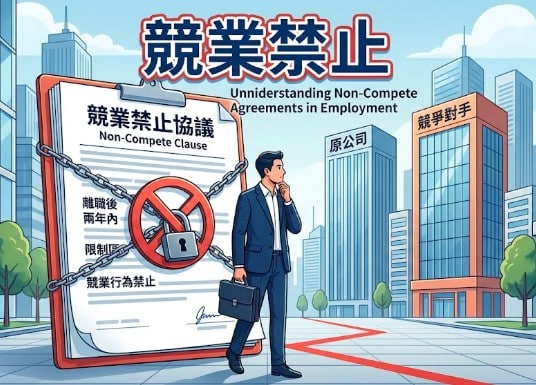
Many business owners are most anxious about the scenario where employees leave to work for competitors or even start their own companies, gradually transferring their former clients away. The problem is that the law doesn't necessarily deem an employee's actions illegal simply because of "customer loss," nor is a contract stipulating "no contact with clients" always valid.
There are usually three key points. First, did the employee take a customer list that the company invested in building, organizing, and analyzing? Second, did the company usually manage this information as confidential? Third, do the non-compete clauses that restrict the employee's work after leaving the company meet the requirements of Article 9-1 of the Labor Standards Act?
In other words, when dealing with "former employees taking customer lists with them," companies cannot rely solely on emotions or a confidentiality agreement. They must first determine whether the matter is simply a matter of customers' free choice and a breach of confidentiality, or whether it involves civil damages or criminal liability under the Trade Secrets Act.
According to Article 2 of the Trade Secrets Act, a trade secret must meet three requirements: it must not be easily known by ordinary persons with access to such information, it must have actual or potential economic value due to its confidentiality, and all parties must have taken reasonable measures to keep it confidential.
Therefore, customer names that can be found on public websites, business cards, exhibition brochures, or through general online searches are usually difficult to claim as trade secrets. Conversely, if a company's internal customer information includes purchasing habits, historical quotations, transaction terms, preferred contact persons, payment status, negotiation records, renewal schedules, special needs, and business development history, and this information is not easily accessible from the external market, it is more likely to be considered as having trade secret value.
The Intellectual Property Office of the Ministry of Economic Affairs, in its analysis of trade secret adjudication, repeatedly reminds that customer information should not be judged solely on its surface name. Instead, it is crucial to assess whether the company has invested time, resources, and professional judgment to organize fragmented information into a database with commercial value.
Many companies fail not because they lack data, but because they lack management. Employees routinely use their own Gmail accounts to access company client lists, and there's no handover checklist when they leave. CRM systems lack access control levels, contracts lack confidentiality obligations, and files lack watermarks, download records, or proper sealing procedures for departing employees. Claiming it's highly confidential information afterward is unlikely to be fully accepted by the court.
Reasonable confidentiality measures do not necessarily need to meet the cybersecurity standards of large technology companies, but at the very least, employees should be clearly aware of which data is confidential, who can access it, whether forwarding or downloading is prohibited, and whether it must be returned or deleted upon leaving the company. In practice, confidentiality clauses, employee handbooks, system permissions, confidentiality markings, login records, handover procedures upon leaving the company, and confirmation of data deletion are all important evidence for asserting rights in the future.
Many companies include clauses in their employment contracts stipulating that employees may not engage in the same or similar business within two years of leaving the company. However, non-compete agreements restrict employees' right to work, so the legal requirements are stricter than those in general contracts.
According to Article 9-1 of the Labor Standards Act, post-employment non-compete agreements must meet several key requirements. The employer must have legitimate business interests that are protected, the employee's position or duties must allow access to or use of trade secrets, the period, area, scope of professional activities, and target employers of the restriction must be reasonable, and the employer must also provide reasonable compensation to the employee for losses incurred due to not engaging in non-compete activities.
If these conditions are lacking, the non-compete clause may be entirely or partially invalid. A common risk of invalidity in practice is that the company binds all employees to a two-year non-compete clause, regardless of position or access to confidential information, without paying reasonable compensation. While this wording may seem strong, it is actually easier to break down in litigation.
According to Article 7-3 of the Ministry of Labor's "Enforcement Rules of the Labor Standards Act," non-compete compensation should take into account the employee's average monthly salary at the time of departure, the duration of the restriction, the scope of the restriction, the losses suffered by the employee in complying with the restriction, and whether the agreement is reasonable. The compensation should not be less than 50% of the employee's average monthly salary at the time of departure, and should be sufficient to maintain the employee's living needs during the non-compete period after departure.
Therefore, it is very risky for a company to simply state in the contract that "it is already included in the salary" or "a symbolic compensation of one dollar". A more prudent approach is to clearly specify the restriction period, restricted area, prohibited work content, compensation calculation method, payment time and consequences of breach of contract in the non-compete clause, and to reconfirm this with the employee upon their departure.
When a company discovers a large number of customers switching orders, the first step is not to immediately name names on social media or industry groups, but to preserve evidence. This includes system login records before and after the employee's departure, data download records, email records, USB usage records, CRM remittance records, the time of abnormal customer order switching, employee-customer contact information, handover documents, and the original employment contract, confidentiality agreement, and non-compete agreement.
If a company publicly accuses another party of stealing trade secrets without sufficient evidence, it may incur defamation charges. A more appropriate approach is to first have a lawyer assist in reviewing the evidence, and if necessary, send a letter requesting the cessation of use, return, or deletion of the data, while reserving the space to apply for evidence preservation, preliminary injunction, or initiate civil or criminal proceedings.
According to Article 12 of the Trade Secrets Law, anyone who intentionally or negligently infringes upon another person's trade secrets shall be liable for damages. Article 13 of the same law also stipulates the methods for calculating damages, which can be claimed based on actual damages, lost profits, and the profits gained by the infringer.
Even if the case does not necessarily constitute a trade secret, but the employee clearly violated a confidentiality agreement, a handover obligation upon leaving the company, or a non-compete agreement, the company may still claim damages under civil law for breach of contract, tort, or contractual obligations. The difference lies in the fact that the company must prove the validity of the clause, the employee's breach of obligation, the company's loss as a result, and a causal relationship between the two.
If an employee downloads, reproduces, possesses, uses, or discloses company trade secrets without authorization, they may be subject to criminal liability under Section 13-1 of the Trade Secrets Act. This section focuses not on simply leaving the company to work in the same industry, but on actions involving the improper acquisition, use, or disclosure of trade secrets with the intent to illegally benefit oneself or a third party, or to harm the interests of the trade secret owner.
Therefore, companies cannot treat every case of employee turnover as a criminal offense. Cases truly suitable for criminal prosecution typically involve clear evidence of data downloading, forwarding, copying, leaking, deletion, or use at the new company. If a client simply switched services based on trust and did not use company confidential information, the likelihood of a criminal case is significantly lower.
The work experience, interpersonal skills, industry understanding, and general business skills accumulated by employees during their employment are, in principle, not assets that a company can permanently monopolize. The law generally does not prohibit employees from working with their professional skills after leaving a company, nor does it prohibit clients from freely choosing their partners.
However, if employees use a former company's internal client list, bottom-line pricing, undisclosed contract terms, procurement plans, renewal schedules, or special business strategies, they may be crossing the line into legitimate competition. Simply put, employees can take skills and experience, but they cannot take the company's protected confidential information.
Even if an employee signs a non-compete clause, it's crucial to examine whether the restriction is reasonable. For example, if an employee was merely an administrative assistant with no access to client strategies or trade secrets, but the company requires them to refrain from working for any company in the same industry for two years after leaving, this restriction might be excessive. Conversely, if an employee is a senior business executive with comprehensive knowledge of client pricing, renewal strategies, and market positioning, a company that imposes a non-compete restriction for a reasonable period, in a reasonable region, and within a reasonable scope of their job duties, and provides adequate compensation, is more likely to be deemed valid.
Many businesses are most vulnerable because customer data has long been stored only in the personal mobile phones, Line, Excel spreadsheets, or private email accounts of their employees. Only when an employee leaves do the company realize it lacks complete data and cannot prove which information belongs to the company.
A more pragmatic approach is to establish a company-wide, centrally managed CRM or customer database, clearly recording the data source, update time, responsible person, and access permissions. Important customer data should be prevented from being exported arbitrarily; records should be kept of any exports, and watermarks or download restrictions should be implemented if necessary. The departure process should include account deactivation, device return, data restitution, removal of cloud access permissions, and reaffirmation of confidentiality obligations.
Confidentiality obligations and non-compete agreements are not the same thing. Confidentiality clauses primarily prohibit employees from disclosing or using company secrets and can typically persist during employment and after leaving the company. Non-compete agreements, on the other hand, restrict employees from engaging in specific work after leaving the company. Because they affect the right to work, they must comply with Section 9-1 of the Labor Standards Act and its implementing regulations.
Therefore, companies should not rely on a single standard clause to address all issues. For general employees, the focus should likely be on confidentiality and data return. Only for senior executives, core business personnel, R&D staff, legal personnel, finance personnel, or those with access to significant trade secrets should an assessment be conducted to determine whether to design separate non-compete clauses, along with appropriate compensation.
The biggest concern with departing employees taking client lists is that companies may lack prior regulations and then misuse methods afterward. For businesses, the first step should be establishing a confidentiality management system that can be seen by the courts, followed by designing effective non-compete and confidentiality clauses for key positions. For employees, it's crucial to avoid bringing client information, pricing records, internal documents, or business strategies from their previous company to their new job, both before and after leaving. Even if the intention is simply to quickly develop business, this could lead to civil damages or even criminal risks.
If a company has discovered data leaks, unusual customer order transfers, or former employees using the original company's business list after joining a competitor, it is recommended to first preserve evidence. Then, a lawyer should assess whether to send a letter, negotiate, apply for evidence preservation, file a civil lawsuit, or further pursue criminal charges related to trade secrets. Fidelity Law Firm can assist companies in reviewing confidentiality agreements, non-competition clauses, resignation procedures, and trade secret management systems. They can also assist in determining compensation and defense strategies on a case-by-case basis.
Not necessarily. If the client list is publicly available information, or if clients switch partners based on their own choices, it may not be illegal. However, if employees download, copy, or use client data that has been compiled, analyzed, and is under confidentiality management by the company without authorization, it may involve breach of confidentiality agreements, civil damages, or even liability under trade secret laws.
Not necessarily. Non-compete agreements must comply with Section 9-1 of the Labor Standards Act, including the employer having a legitimate business interest, the employee's job providing access to trade secrets, the scope of the restriction being reasonable, and the employer providing reasonable compensation. If the restriction is too broad or there is no compensation, the clause may be invalid.
Generally, this is not advisable. A permanent and comprehensive ban on contact with existing clients is easily perceived as excessively restricting employees' right to work and free competition. Companies can prohibit employees from using confidential client information through confidentiality clauses, and can also stipulate a reasonable period and scope of non-compete agreements when legal requirements are met, but they cannot use overly vague clauses to monopolize client selection.
Companies should ensure that customer data is kept confidential, has economic value, and is subject to reasonable confidentiality measures. In practice, this can be demonstrated through CRM access control, confidentiality labeling, download records, employee confidentiality agreements, departure handover lists, account deactivation, and data return confirmation, proving that the company indeed manages customer lists as important confidential information.
The first step is to preserve evidence, not to make public accusations. Companies should retain records of system logins, downloads, forwarded documents, communications, customer order transfers, handover documents, and contracts. They should also consult a lawyer to assess whether to send a letter requesting evidence preservation, file a civil claim, or file a criminal complaint. Making accusations prematurely with insufficient evidence may instead lead to defamation or labor disputes.
Fuda Law Firm
Line:https://line.me/ti/p/@fdlaw
Tel: 0277093611
Facebook:https://www.facebook.com/fudalawyer
website:https://fdlaw.com.tw/
e-mail:info@fdlaw.com.tw
If you encounter legal issues similar to those described in this article, you typically need to consider contracts, financial transactions, records, company documents, and litigation risks simultaneously, rather than just looking at a single legal provision. Below is a summary of related topics and services offered by Fidelity Law Firm that can be further explored after reading this article.
In addition to the content of the information itself, it is also necessary to prove that the company has reasonable confidentiality measures, such as access control, confidentiality signs, education and training, cybersecurity records and resignation procedures.
It is necessary to examine whether the customer list is not publicly available, whether it has economic value, whether the company has confidentiality measures, and how employees obtain and use it.
Not necessarily. It is necessary to examine whether the protection of interests, the scope of restrictions, the period, the geographical area, the compensation, and the relevance to official duties are reasonable.
If you are dealing with company, responsible persons, contracts, financial transactions, investigative, or litigation risks, it is recommended that you first organize the facts, documents, and potential legal proceedings together, rather than relying on a single keyword. The following content can help you explore related topics further and quickly determine your next steps.
Not necessarily. It depends on whether the client list is confidential, has economic value, and whether the company has taken reasonable confidentiality measures, such as access control, confidentiality agreements, labeling, and handover procedures upon departure.
First, save login records, download records, emails, cloud records, device handover information, and confidential documents, and then assess civil injunction, damages, or criminal charges.
Non-compete agreements must meet requirements such as reasonable scope, protection of interests, duration and geographical area, and compensation; they cannot be effective simply because they are written in the contract.
If you need legal assistance to determine the next step, you can first organize the above documents and timeline, and then contact Fidelity Law Firm for assistance in assessing the direction of the process. Contact Fidelity Law Firm
