Telephone
02-77093611
Line
@fdlaw
address
17th Floor, No. 180, Section 2, Dunhua South Road, Da'an District, Taipei City
Telephone
02-77093611
Line
@fdlaw
address
17th Floor, No. 180, Section 2, Dunhua South Road, Da'an District, Taipei City


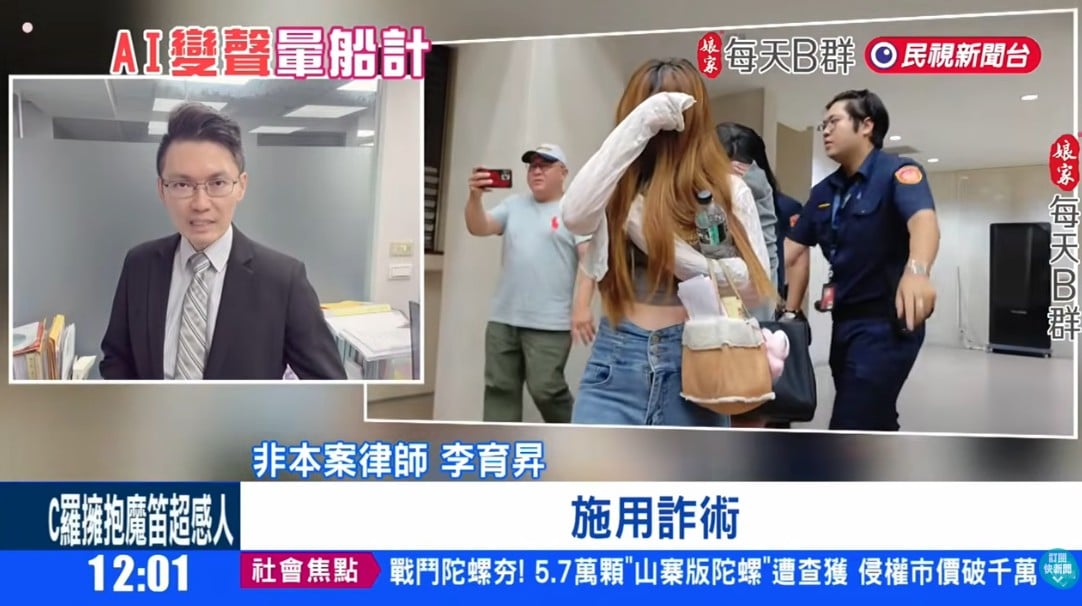
AI Scammer Transforms Male Voice into Female Voice to Lure Men into Buying Gifts | FTV News Reporter Huang Enlin
News link:https://www.youtube.com/live/Kys_xOHnL-w?si=d2LVGaxcLstk9Js9
AI technology is being used by fraud groups to create romantic scams. These scams have evolved from using fake photos and identities to employing voice changers to transform male voices into female voices, leading victims to believe they are dating or having a romantic relationship with a woman. The perpetrators then use excuses such as birthdays, urgent needs, or expressing affection to trick victims into swiping their credit cards to buy gifts or pay for other things.
The key point of these cases is that the fraudsters do not simply chat, but use false identities and emotional rhetoric to lead the victims astray, thereby causing them to hand over money or make credit card payments, which may involve the crime of fraud under criminal law.
Attorney Li Yusheng of Fidelity Law Firm stated that AI voice changing is merely a tool for fraud; the real legal core remains "whether fraudulent means were used to induce the victim to hand over property." According to Article 339 of the Criminal Code, if a person intends to illegally possess property for themselves or a third party and uses fraudulent means to induce someone to hand over property, they may be guilty of fraud.
The common difficulty with romance scams is that victims initially believe it's a normal relationship, only realizing something is wrong when expenses increase, or the other party refuses to meet, video chat, or demands continuous gifts. Therefore, if you suspect you've been scammed, immediately save your conversations, credit card statements, payment pages, shipping information, the other party's account details and social media profile, and contact your bank and police as soon as possible.
Lawyer Li Yusheng reminds victims that having a credit card used does not mean there is no way to remedy the situation. Victims can first report the suspected fraudulent transaction to the issuing bank and inquire whether they can apply for a disputed amount, stop payment, or replace the card. At the same time, they should also complete the police report procedure and obtain a case acceptance certificate, which will serve as important evidence for asserting their rights with the bank, platform, or judicial authorities later.
Whether using a real voice, a fake photo, or AI voice changer, as long as the purpose is to create a false identity and induce the victim to pay, it may constitute fraud.
Fraud doesn't only involve money transfers. If victims use their credit cards to purchase gifts, points, virtual goods, or pay for services on their behalf, as long as the money was spent due to fraud, it can become a focus of claims for compensation and criminal investigations.
It is recommended to immediately stop making payments, refrain from providing any further verification codes or personal information, and contact your bank to cancel your card or confirm the disputed payment process. The risk is even higher if scammers request you to download an app, provide credit card information, or provide a one-time verification code.
Simply calling 165 for consultation does not necessarily constitute filing a police report. If you have already suffered financial loss, you should bring your call logs, credit card statements, order records, account information, and proof of payment to the local police station to file a police report and obtain a case acceptance certificate.
Possibly. If the other party uses a false identity, a fake romantic relationship, or a false reason to get the victim to swipe their credit card to buy gifts or make payments, it may constitute a criminal offense of fraud.
Not necessarily, but you should contact the issuing bank immediately to inquire whether you can apply for a disputed payment, stop payment, or handle suspected fraudulent transactions. You should also preserve evidence and report the incident to the police.
It is recommended to save chat logs, voice recordings, credit card transaction details, order information, logistics information, the other party's social media account, phone number, LINE ID, screenshots of payment pages, and police report information.
Not necessarily. 165 can provide consultation and assistance with referrals, but if there has already been actual financial loss, it is generally still necessary to go to the police station to complete a statement and obtain a certificate of acceptance of the case.
Fuda Law Firm
Line:https://line.me/ti/p/@fdlaw
Tel:0277093611
Facebook:https://www.facebook.com/fudalawyer
website:https://fdlaw.com.tw/
e-mail:info@fdlaw.com.tw
Yes. If you have already transferred money, swiped your card, purchased gifts, or provided personal information, it is recommended that you save the conversation records, payment records, account information, and platform data as soon as possible, so that a lawyer can assist in assessing fraud, money laundering, and the direction of your claim.
The key is whether the other party misled the victim into handing over money by using a false identity or false information. AI is just a tool; the determination still needs to go back to the elements of fraud, the flow of funds, and the division of labor among accomplices.
The earlier the better. Especially when the amount is high, involves cross-border accounts, virtual currencies, credit card disputes, or platform data storage, early intervention usually offers a better chance of preserving evidence and tracing the flow of funds.
