Telephone
02-77093611
Line
@fdlaw
address
17th Floor, No. 180, Section 2, Dunhua South Road, Da'an District, Taipei City
Telephone
02-77093611
Line
@fdlaw
address
17th Floor, No. 180, Section 2, Dunhua South Road, Da'an District, Taipei City


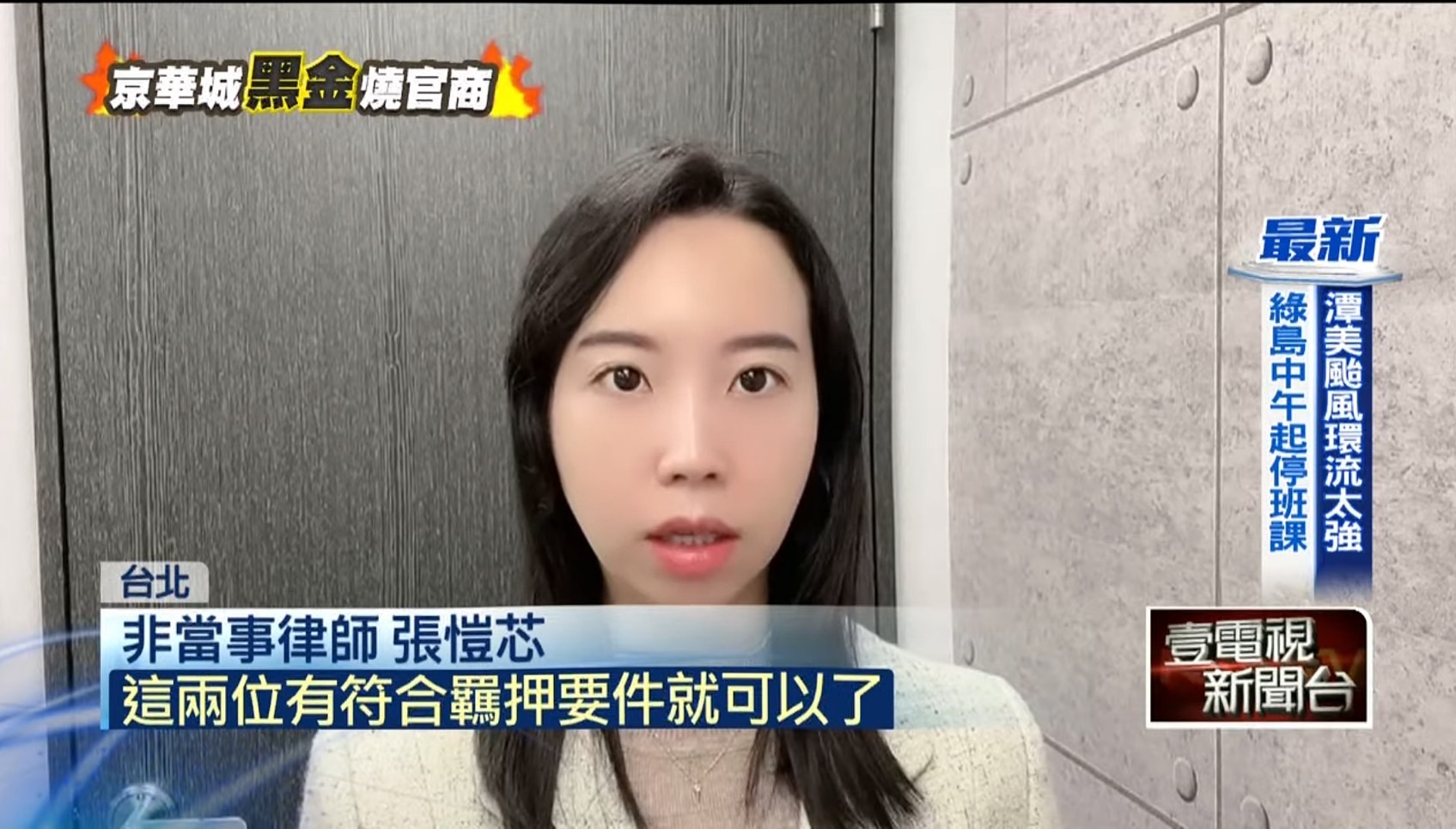
The Jinghua City investigation cannot be completed in 2 months? Ying Xiaowei and Shen Qingjing applied for postponement of detention│One TV News, Times News
The Taipei District Prosecutor's Office investigated the Jinghua City case. Prosecutors applied to the court to extend their detention in accordance with the law for Taipei City Councilor Ying Xiaowei and Weiking Group Chairman Shen Qingjing, whose detention period was about to expire. Yesterday (23rd) night, Shen Qingjing passed 3 and a half months. After an hour's defense, he was remanded to the Taipei Detention Center. As for Ying Xiaowei, an adjournment hearing was held this morning. The prosecutor believed that there was a gap in the criminal facts confessed by Ying Xiaowei and his accomplices and witnesses, which was enough to conclude that there was a risk of collusion. If Failure to extend the detention may further obscure the case and make it difficult to effectively pursue prosecution.
A criminal lawyer from Fidelity Law Firm stated that the court currently considers the defendants in this case to have a very high level of suspicion of committing a crime. As a result, other defendants will likely be treated similarly, also deemed to have a high level of suspicion, and to prevent collusion or destruction of evidence, the likelihood of their detention being extended will significantly increase. The court's decision on whether to extend detention primarily considers the strength of the suspicion of a crime and the possibility of collusion or flight.
Lawyers at Fidelity Law Firm advise that in similar cases, one should not only look at the news headlines, but also return to the evidence, legal requirements, procedural stages, and the client's actual objectives. If the case has entered the court, district prosecutor's office, investigation bureau, or negotiation process, the earlier the information is gathered, the more room for maneuver it will retain.
If you have already received a notice from the District Attorney's Office, the police station, or the court, it is recommended that you first organize the summons, case details, conversation records, and related documents, and have your lawyer assess the direction of the investigation, possible charges, and response strategies to avoid making unfavorable statements without knowing the legal consequences.
Whether or not detention is necessary is usually related to the suspicion of a criminal suspect, the possibility of escape, the risk of collusion or destruction of evidence, and the seriousness of the case. In major criminal cases, financial crimes, corruption cases, or cases involving multiple accomplices, it is even more necessary to prepare specific materials as early as possible to explain that there is no need for detention.
Our firm can assist in criminal investigations, detention hearings, bail applications, criminal defense, fraud, breach of trust, money laundering, corruption, securities and banking law, and other major criminal cases, and plan the defense strategy based on the case information.
Line:https://line.me/ti/p/@fdlaw
Tel:0277093611
Facebook:https://www.facebook.com/fudalawyer
website:https://fdlaw.com.tw/
e-mail:info@fdlaw.com.tw
