Telephone
02-77093611
Line
@fdlaw
address
17th Floor, No. 180, Section 2, Dunhua South Road, Da'an District, Taipei City
Telephone
02-77093611
Line
@fdlaw
address
17th Floor, No. 180, Section 2, Dunhua South Road, Da'an District, Taipei City


Embezzled an 8-digit amount! Cai Aga exposed Lola’s money-making tactics. Global News reporter Huang Gengen’s news link: Cai Aga released a video on his channel yesterday to explain the whole incident of ex-employee Lola’s dismissal. He pointed out that Lola used AB contracts and other means to defraud The company and the manufacturer had been involved in illegal amounts as high as 8 figures for 3 or 4 years. However, after Laura was exposed, she still showed no regrets and even quit the group directly without even an apology. About half the time after the incident, It took several months before Laura received the certificate deposit letter before she was willing to deal with it head on. Lawyer Li Yusheng from Fidelity Law Firm said that the so-called AB contract refers to a transaction that originally only had one contract, but used different techniques to split one contract into two contracts, or to sign two contracts, one real and one fake. . In this case…

News and Video Source: Case Background and Legal Controversy - Fraudulently Claiming Assistant Fees Remains Difficult to Resolve! The KMT and DPP Once Attempted to Jointly "Decriminalize" It | Mirror News Reporters Yan Kaixu and Chen Xinrui Cases of legislators suspected of fraudulently claiming assistant fees are rampant, especially during their tenure as county and city councilors. For example, Hsinchu Mayor Kao Hung-an, former Taipei City Councilor Lin Ying-meng, and New Taipei City Deputy Speaker Chen Wen-chih, among others, have all been convicted. Even though the Legislative Yuan passed an adjustment to the assistant fee subsidy last year, many councilors still feel it's insufficient and continue to pay out of their own pockets to maintain their offices. However, the fraud continues to occur, seemingly becoming a shared historical legacy. A criminal lawyer from Fidelity Law Firm stated that in Kao Hung-an's assistant fee case, the judge believed that the relevant regulations on assistant fees were unclear and therefore requested a constitutional interpretation, but the Grand Justices refused to accept the case…

Mobile phone cases "look too much alike" start a war! Rhino Shield "won the lawsuit" against Devil Shield │Dongsen News reporters Zhao Yiji and Lin Yuquan News link: Rhino Shield, a well-known domestic mobile phone case, was dissatisfied with its competitor Devil Shield. The iPhone 11 mobile phone case was suspected of imitation. The first lawsuit was brought to court. The case was determined by the second instance judge. Devil Shield's mobile phone case is highly similar to Rhino Shield in appearance, material, design, etc., which violates the Fair Trade Act. Therefore, it lost the second instance. In response, Devil Shield's founder issued a statement on Facebook, emphasizing that consumers' rights will not be violated. affected, and they plan to appeal to the third instance. Lawyer Li Yusheng from Fidelity Law Firm said that the judge believed that Devil Shield’s products, whether in terms of overall appearance, materials, design, patterns, or the marketing techniques of “mobile fitting room”, were all incompatible with Rhino Shield…
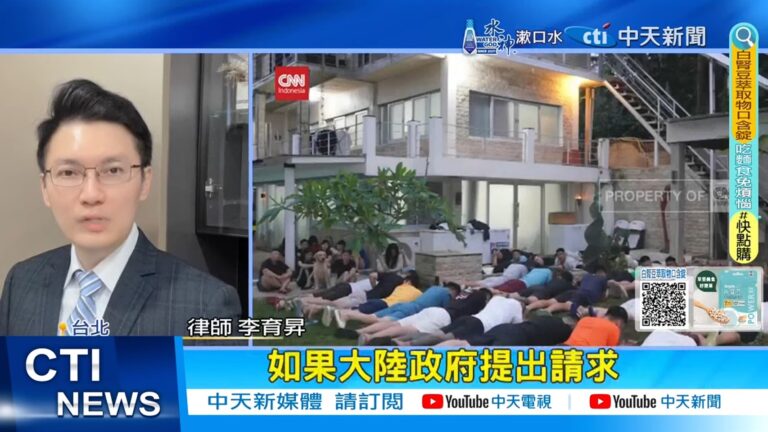
103 Taiwanese were arrested for fraud in Indonesia. One reason is that they may be intercepted and sent to the mainland for trial│Zhongtian News reporters Li Caishan and Li Qiying News link: Indonesian police uncovered a fraud group, and the 103 fraudsters turned out to be "Taiwanese"! Ministry of Foreign Affairs The representative office in Indonesia is actively coordinating repatriation. However, if the target of the fraud is a mainlander, it is not ruled out that these prisoners will be intercepted and sent to the mainland for trial! Lawyer Li Yusheng from Fidelity Law Firm said that these criminal group members committed crimes in Indonesia, so the Indonesian judicial authorities will directly conduct trials. However, since China and Indonesia have signed a mutual legal assistance treaty, if the Chinese government makes a request and the Indonesian judicial authorities agree, it is not ruled out that these suspects may be sent to China for trial...

Silver House Soup and Curry is selling double packs | China TV News reporter Gan Yuxin’s news link: Silver House Soup and Curry is selling double packs. The owner of the current main store on Shida Road in Taipei City said that the original store on Pucheng Street was owned by someone else. Granted, but because other people did not follow the main store's instructions on ingredients and cooking methods, the customer said the taste had changed. Does the head store owner have the right to prohibit others from using the Ginya Soup Curry sign? Lawyer Li Yusheng from Fidelity Law Firm said that it mainly depends on the contract between the two parties. According to the documents provided by the head office owner, it can be seen that he has applied for trademark registration for the signboard. As for whether he has authorized others to use it and whether he has the right to terminate the authorization, this still needs to return to the contract between the two parties. If there is any situation of joining or selling a store, it is recommended to seek assistance from a lawyer to discuss the relevant rights and obligations...

This article focuses on the crucial role of trademark protection for Taiwanese companies entering the mainland China market. The mainland market is highly competitive, and trademarks, as vital brand assets, must be properly protected to prevent infringement and trademark disputes. Here are six key points Taiwanese companies should pay attention to when protecting their trademarks in mainland China: 1. Early Trademark Registration: Trademark registration is the first line of defense for a company's brand, especially when entering the international market. The importance of early trademark registration, its specific steps, and considerations are as follows: 1. Preventing Preemptive Registration and Infringement: Mainland China operates on a "first-come, first-served" trademark system, meaning anyone can register an unregistered trademark, even if it is already in use in other regions. Therefore, Taiwanese companies that fail to register their trademarks in mainland China early may face the risk of others registering them first. Once a trademark is preemptively registered, the company will be unable to use it in the mainland market…