Telephone
02-77093611
Line
@fdlaw
address
17th Floor, No. 180, Section 2, Dunhua South Road, Da'an District, Taipei City
Telephone
02-77093611
Line
@fdlaw
address
17th Floor, No. 180, Section 2, Dunhua South Road, Da'an District, Taipei City


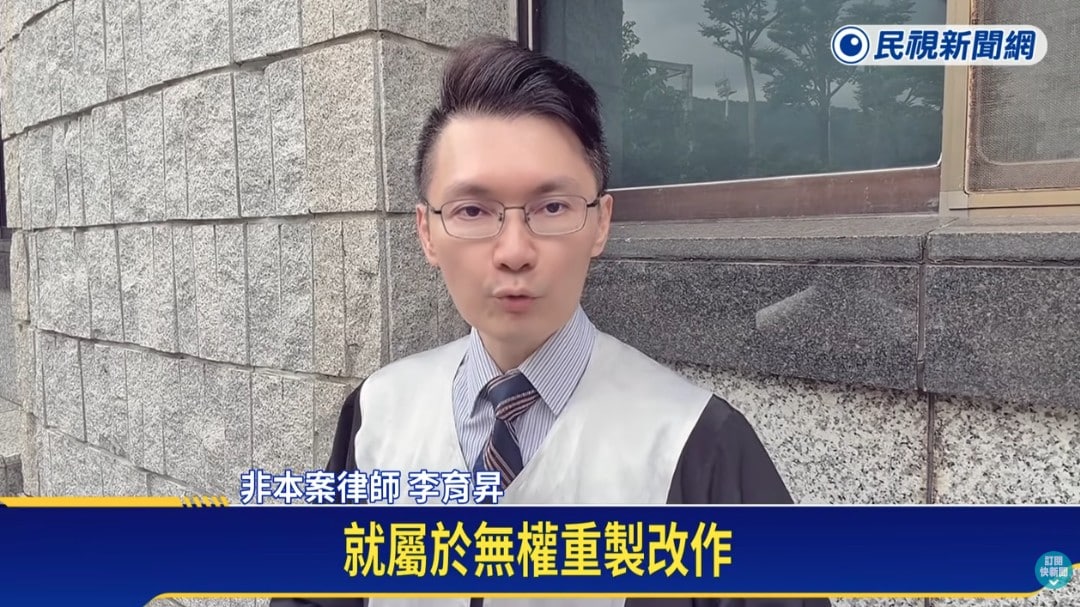
Yu Shu-chen's portrayal of Luffy and the "AI post-production" of other characters in promotional videos spark controversy | FTV News reporter Wu Wen-yi
News link:https://youtu.be/2xFMR5P-DBM?si=A9alvbgLpzHgEC1V
Yu Shu-chen, the mayor of Ji'an Township in Hualien County, recently posted a video on social media promoting the Hualien County government's summer activities. In the video, she cosplayed Luffy from "One Piece" and used AI to create other characters. After the video was released, it sparked controversy among netizens, who questioned whether it involved copyright infringement related to anime characters. In response, Yu Shu-chen stated that the video was taken down immediately and explained that the editor "didn't think that much about it."
These incidents reflect a common misconception: that AI-generated content, rather than a direct copy of the original image, will not infringe on copyrights. In reality, if AI-generated content closely resembles another person's protected character design, appearance, name, or trade identity, it may still pose risks under copyright, trademark, or fair trade laws.
Attorney Li Yusheng of Fidelity Law Firm stated that anime characters are usually not just a single image, but include character design, clothing, expressions, names, worldviews, and commercial identities. If a promotional video explicitly uses "Luffy" or makes it immediately clear to viewers that it is imitating a character from "One Piece," even if the footage is generated by AI, it does not absolve the audience of copyright infringement concerns.
Copyright law protects specific expressions, not just simple concepts. Therefore, if a film only contains general elements of sailing, pirates, and straw hats, it may not necessarily constitute infringement. However, if the character's appearance, costume, and features are highly similar to those of a well-known character, and it is used to promote government activities, it may be considered as exploiting the popularity of another character to attract traffic.
Attorney Li Yusheng also cautioned that government agencies, politicians, or public sector fan pages should be more careful when using popular culture elements. Even if the activity itself is not for profit, as long as it is publicly promoted, it may involve issues such as public transmission, modification, reproduction, or trademark use. "The editor didn't think that much" can be used as an explanation for the incident, but it does not necessarily absolve one of legal responsibility.
The Intellectual Property Office has stated that whether AI-generated content is protected or infringes on the rights of others depends on the specific creative process and the final product. If an AI-generated image is substantially similar to an existing work, copyright disputes may still arise.
Well-known anime characters like Luffy may involve character images, names, costumes, and trademarks. If the public can directly associate these elements with a specific work or rights holder, the risk of misuse increases.
While public sector publicity activities may not be directly for profit, they are still considered public use. Fair use must take into account factors such as the purpose of use, the nature of the work, the proportion of use, and the impact on the market; it cannot be simply glossed over as "non-profit" or "publicity campaign."
The immediate removal of the video helped reduce its spread and subsequent damage. However, if the rights holder believes that harm has been caused, they may still demand an explanation, apology, compensation, or file other legal claims.
Possibly. If AI-generated content is highly similar to the appearance, name, or specific expression of a well-known anime character, even if it is not a direct copy of the original image, it may still pose copyright or trademark risks.
There may still be issues. Whether an infringement has occurred depends not only on whether there is profit involved, but also on whether the use was public, the proportion of use, whether it affects the rights holder's market, and whether it exploits the fame of another person's role.
They may still be held accountable. If the video is released through official or senior official social media accounts, external viewers will usually assume it is propaganda content representing the agency or senior official, and internal staff negligence does not necessarily absolve them of external responsibility.
The safest approach is to obtain authorization, or use original characters, public domain materials, or legally licensed materials. If you wish to pay homage to or imitate someone, you should avoid using easily identifiable names, designs, and logos.
Further reading:
A Shield Protecting the Value of Innovation: Fidelity's Intellectual Property Law Team
Fuda Law Firm
Line:https://line.me/ti/p/@fdlaw
Tel:0277093611
Facebook:https://www.facebook.com/fudalawyer
website:https://fdlaw.com.tw/
e-mail:info@fdlaw.com.tw
Possibly. If the generated content closely resembles existing works, characters, images, music, or video clips, it may still involve copyright issues such as reproduction, adaptation, or public transmission.
The source of the materials, the platform's authorization terms, the portrait rights of the individuals, and the risks associated with trademarks and copyrights should be verified. The generation records and authorization documents should be retained to avoid being claimed for infringement in the future.
It is advisable not to arbitrarily admit responsibility or respond publicly. Instead, preserve the source of materials, design process, and authorization information so that lawyers can assess whether there is infringement, the scope of compensation, and response strategies.
