Telephone
02-77093611
Line
@fdlaw
address
17th Floor, No. 180, Section 2, Dunhua South Road, Da'an District, Taipei City
Telephone
02-77093611
Line
@fdlaw
address
17th Floor, No. 180, Section 2, Dunhua South Road, Da'an District, Taipei City


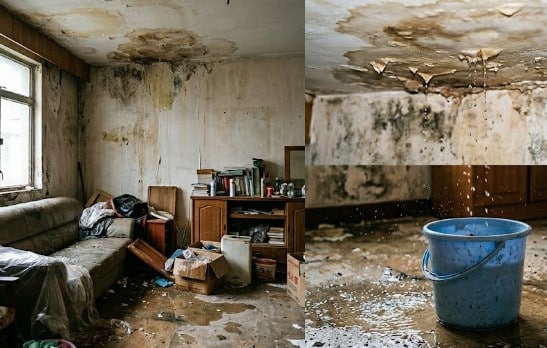
The worst thing about buying a house isn't necessarily paying too much, but encountering sudden leaks in the ceiling, window frames, and bathroom walls during the first heavy rain after taking possession. What's even more troublesome is that sellers often say, "We handed over the house in its current condition," and real estate agents might reply, "You need to find a leak-fixing professional; it's not a legal issue." In a panic, the buyer might tear down the ceiling and redo the waterproofing, only to find that by the time they want to seek compensation, they've already destroyed the most important evidence.
買到漏水屋怎麼辦,第一個重點不是立刻問能不能告,而是先釐清漏水是不是法律上的房屋瑕疵、瑕疵是在交屋前就存在,還是交屋後才新發生。這兩件事會直接影響能不能向賣方主張瑕疵擔保、減少價金、Damages,甚至解除房屋買賣契約。
according toArticle 354 of the Civil Code (National Legal Database)The seller must guarantee that the property will not have any defects that reduce its value, ordinary utility, or contractually intended utility at the time of the transfer of danger. In the case of real estate sales, leaks, mold, long-term water seepage, and ineffective waterproofing of exterior walls or rooftops can usually affect the value and habitability of a property, and are not simply aesthetic issues.
However, buyers should note that the court will not automatically hold the seller liable simply because water was seen after handover. Buyers typically need to prove that the leak existed at the time of handover, such as cracks in the exterior walls, aging roof waterproofing, poor sealing of window frames, long-term pipe leaks, or that the seller had previously repaired, painted over, or performed dehumidification without disclosing the leak. If the leak is a new incident caused by the buyer's renovations after handover, such as puncturing pipes, construction work by upstairs neighbors, or a typhoon, the liability will be entirely different.
In practice, preserving the original state as early as possible is beneficial. When a leak is discovered, photos should be taken of the leak's location, time, rainfall intensity, seepage area, changes in watermarks on the wall, and a repair quote. A leak detection professional, architect, civil engineer, or other relevant professional should be consulted to determine the possible cause. For large sums of money, it is not recommended to rely solely on verbal quotes; it is best to obtain written inspection records or assessment documents.
Used house sales contracts often contain clauses such as "delivery as is," "the buyer has fully understood the condition of the house," and "the seller is not liable for defects." These clauses are not entirely invalid, but they are not a get-out-of-jail-free card for the seller to conceal leaks.
according toArticle 355 of the Civil CodeIf the buyer is aware of the defects at the time the contract is concluded, the seller is generally not liable for warranty. If the buyer fails to discover obvious defects due to gross negligence, and the seller has not provided a warranty against defects, the seller may also argue against liability. This is why viewing, inspecting, and reviewing the property condition statement before signing the contract is extremely important.
However, according toArticle 366 of the Civil CodeEven if the contract specifically exempts or limits the seller's liability for defects, such special agreement remains invalid if the seller intentionally fails to disclose defects. In other words, if the seller knowingly checks "no leakage" on the building condition confirmation form or covers up water stains with new paint or decoration, the buyer can still argue that the exemption clause does not protect the seller.
The Supreme Court's Civil Judgment No. 550 of 2015 pointed out that the provisions of the Civil Code regarding warranty against defects in sales are not mandatory in principle, and the parties can make special agreements to exempt, limit, or increase liability. This means that the terms of delivery in the current condition will be taken seriously by the courts in most cases; however, it also comes back to Article 366 of the Civil Code, which states that if there is intentional concealment, the seller cannot use special agreements to evade liability.
Many buyers' first question is, "Can I cancel the purchase?"Article 359 of the Civil CodeIf the subject matter of the sale is defective, the buyer may terminate the contract or request a reduction in the price; however, if terminating the contract would be manifestly unfair, the buyer may only request a reduction in the price.
In cases involving leaky roofs, the ability to terminate the contract typically depends on the severity of the leak, whether it affects safety, the intended use of the property, or whether it is beyond repair. For minor leaks such as seepage in window frames, bathroom pipe leaks, or localized wall corrosion, the court is more likely to consider a reduction in the purchase price, repair costs, or damages as a reasonable course of action. However, structural leaks, long-term, large-area leaks, concerns about the use of sea sand (a type of concrete used in roofing), and leaks that jeopardize residential safety are more likely to lead to contract termination.
If the seller guaranteed "no leaks," or the property ownership certificate or building condition confirmation clearly stated no leaks, but it was later proven that leaks existed at the time of handover, the buyer, in addition to terminating the contract or reducing the price, can also...Article 360 of the Civil CodeClaims for damages for non-performance. The scope of compensation may include necessary repair costs, reasonable expenses incurred for appraisal, and value reduction due to defects; however, compensation for emotional distress is usually difficult to establish in disputes involving purely property transactions.
The most common mistake when buying a leaky house is that it drags on until the seller doesn't reply, the agent says they'll coordinate, and the contractor is unavailable, with months passing before the certificate of deposit is finally sent.Article 356 of the Civil CodeThe buyer should promptly inspect the goods according to the usual procedures and notify the seller immediately if any defects are found; any hidden defects that cannot be discovered immediately should also be reported immediately upon discovery later.
AgainArticle 365 of the Civil CodeThe right to terminate the contract or request a reduction in the price will, in principle, be extinguished if not exercised within six months of notice, or after five years from the date of delivery. This six-month period does not apply if the seller intentionally fails to disclose defects, but the buyer should still not delay, as evidence may disappear and the cause of the leak may become difficult to determine due to subsequent renovations, weather conditions, or third-party construction.
In practice, "notification" should not rely solely on phone calls. It is recommended to use evidence-based letters, lawyer's letters, emails, LINE chat screenshots, and other means to prove service, specifically stating the location of the leak, the date of discovery, photos or test results, and requesting the seller to cooperate in the inspection and handling. The Supreme Court's Civil Judgment No. 1277 of 2007 also stated that defect notices should specifically point out the defect, rather than vaguely stating that there is a problem with the house.
If the transaction is completed through a real estate agent, the buyer should not only consider the seller's responsibility but also examine whether the agent fulfilled their obligations to inform and investigate.Articles 23, 24, and 24-2 of the "Regulations Governing the Real Estate Brokerage Industry" can be found in the Ministry of the Interior's regulatory inquiry system.The broker should explain the property description to the counterparty and deliver the property description at the time of signing the contract. When both parties agree in writing and accept the commission, the broker should inform the buyer of any defects in the property that should be known according to the broker's professional knowledge and assist the buyer in conducting necessary inspections of the property.
In addition, the Ministry of the Interior has revised Appendix 1, "Confirmation of Current Building Condition," of the second item in the standardized contract for the sale of existing homes, effective April 1, 2026.Ministry of the Interior AnnouncementThe document states that the amendments aim to strengthen the disclosure of building condition information and protect consumer rights. This means that buyers should carefully review the building condition confirmation document item by item when signing a contract, especially regarding leaks, wall damping, pipework, community facilities, and repair records, and should not rely solely on verbal assurances.
If the real estate agent knew or should have professionally detected the leak but failed to disclose it, or even led the buyer to sign an unfavorable contract, the buyer can further assess whether to claim damages from the real estate agency, apply for consumer dispute mediation, or report the matter to the competent authority. However, the agent's liability and the seller's warranty liability are different legal relationships, and the evidence and the object of the claim must be organized separately.
The worst thing you can do in a dispute over a leaky house is to negotiate with emotions. If the buyer simply says, "I feel cheated," the seller is likely to reply, "The house was handed over in its current condition." The truly effective approach is to turn the issue into legally verifiable facts: where is the leak, when was it discovered, what is the cause, did it exist before handover, did the seller guarantee there would be no leaks, how is it described in the condition statement, how much will the repairs cost, and how much will the property value be reduced?
If the leak is minor, it can be addressed through written notification, joint inspection, and mediation. However, if it involves extensive leaks, seller concealment, misrepresentation by the agent, exclusion of defects in the warranty, outstanding payment, or pending litigation, it is advisable to have a lawyer review the sales contract, property deed, current condition certificate, records of conversations, and inspection data as soon as possible. The earlier the evidentiary framework is established, the greater the chance of obtaining repair costs, price reductions, or other reasonable compensation during the negotiation stage.
When handling disputes related to real estate sales, leaky roofs, stubbornness, and warranties of defects, Fidelity Law Firm first assists clients in determining liability and the basis of their claims, then assesses the terms of mediation, lawyer's letters, injunctive relief, litigation, or settlement. Buyers may not be suited to terminate the contract outright in every case, but they also shouldn't relinquish their rights simply because of the phrase "stubbornness."
Yes, but the key point is not that "the leak only started after moving in" necessarily holds true. Rather, it requires proof that the leak existed at the time of handover or dangerous transfer, and that it was not a condition the buyer was aware of at the time of signing the contract or that could be clearly detected by a normal inspection. The buyer should first take photos and videos, have a professional leak detector or civil engineer determine the cause, and immediately notify the seller in a verifiable manner.
Not necessarily. While the condition of the property at handover usually affects a buyer's right to claim ownership of the property as seen and accepted, it cannot be used as a shield for the seller to intentionally conceal leaks. According to Section 366 of the Civil Code, any agreement exempting or limiting the seller's liability for defects is invalid if the seller intentionally fails to disclose them.
Not necessarily. While Article 359 of the Civil Code allows the buyer to terminate the contract or request a reduction in the price, if the leak is repairable and has limited impact on the overall living experience, the court often considers direct termination to be manifestly unfair to the seller, and the buyer is more likely to obtain a reduction in the price or damages. Only when the leak is so severe that it affects safety, the intended use, or is difficult to repair will the scope for termination increase.
Upon discovering a leak, inspect it promptly and notify the seller immediately. According to Article 365 of the Civil Code, the right to terminate the contract or request a reduction in the price generally expires if not exercised within six months of notification, or after five years from the date of delivery. If the seller intentionally fails to disclose the defect, the six-month limitation does not apply, but evidence should still be secured and legal action taken as soon as possible.
Fuda Law Firm
Line:https://line.me/ti/p/@fdlaw
Tel: 0277093611
Facebook:https://www.facebook.com/fudalawyer
website:https://fdlaw.com.tw/
e-mail:info@fdlaw.com.tw
The price, repair costs, damages, or contract may be reduced or terminated depending on the case assessment, but proof of the leak, the time of occurrence, and the seller's liability is required.
Not necessarily. If the seller knowingly concealed the leak, or if the contract provides other guarantees, there may still be room for compensation.
You should immediately take photos and videos, save the repair estimate, notify the seller or agent, and have a lawyer check the contract and the notification period.
