Telephone
02-77093611
Line
@fdlaw
address
17th Floor, No. 180, Section 2, Dunhua South Road, Da'an District, Taipei City
Telephone
02-77093611
Line
@fdlaw
address
17th Floor, No. 180, Section 2, Dunhua South Road, Da'an District, Taipei City


News Headline:The "Crowd-Scale" court hearing resumed, and during the isolated questioning, Jia Ning was caught singing outside the courtroom.
Media Source:FTV News
reporter:Huang Enlin
Self-media channels are not just accounts; they may also involve...trademarkIncome, company equity, contracts, cash flows, and intellectual property. When a former partnership breaks down, what the court really wants to see is not who behaves in front of the camera, but who can provide evidence to prove the ownership of rights and cash flows.
According to news reports, internet celebrity Andy has filed a lawsuit against the disputed handling of the permissions and revenue of his YouTube channel "Zhongliangji," which he co-owned with his ex-girlfriend Jia Ning. The case has been reopened in court. The court summoned relevant personnel to court and conducted separate questioning in an attempt to clarify the channel's permissions, revenue flow, and the statements made by both parties.
The report also mentioned that Chia-Ning was spotted singing outside the courthouse, and there were different interpretations of her attitude. However, legally, the judgment should still be based on the case file, recording content, company books, channel backstage records, revenue accounts, and the true intentions of both parties at the time.
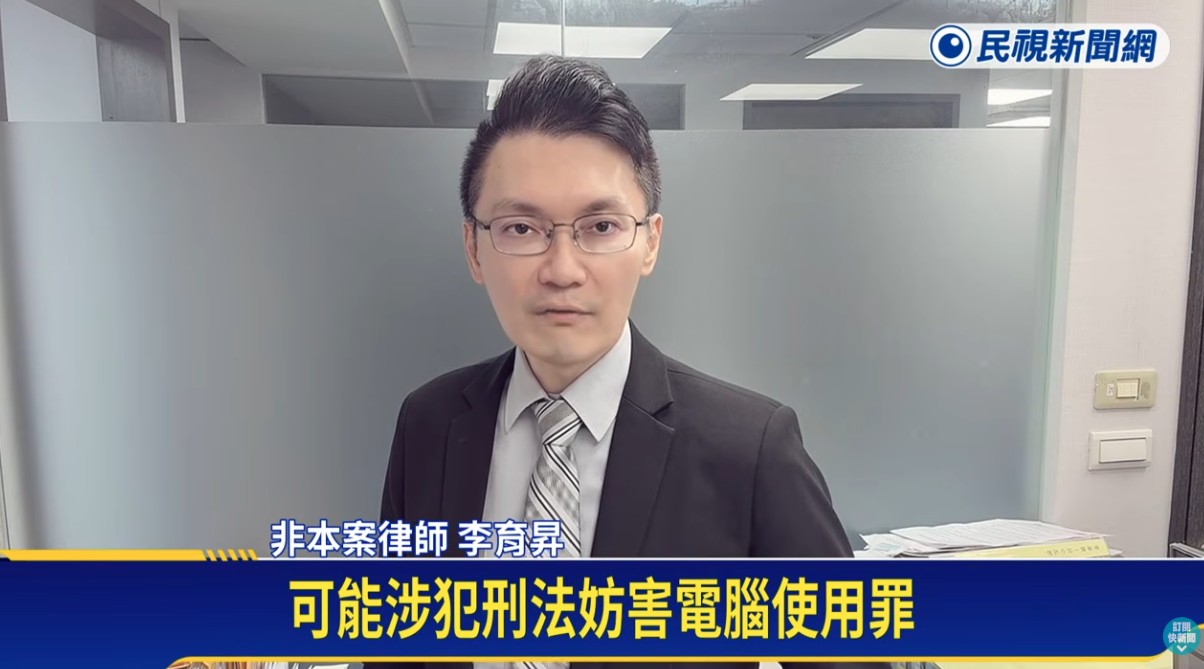
Attorney Li Yusheng of Fidelity Law Firm stated that the purpose of separate questioning is to prevent those who have not yet been questioned from altering their testimonies after hearing others' statements, thus affecting the court's ability to discover the truth. Article 184 of the Code of Criminal Procedure stipulates that if there are several witnesses, they shall be questioned separately; those who have not been questioned shall not be present without permission. When necessary, witnesses may also be ordered to confront other witnesses or the defendant.
In disputes over channel permissions and revenue, courts typically consider several key pieces of evidence: channel creation date, account management permissions, revenue collection account, company incorporation documents, equity and profit-sharing agreements, records of conversations between the parties, transcripts of audio recordings, accounting books, and tax returns. If one party claims that "the channel has been gifted" or "the revenue should belong to a certain party," they must provide sufficient evidence to prove the true intentions of both parties.
Attorney Li Yusheng cautions that when influencers, YouTubers, or creators jointly operate a channel, the most easily overlooked aspect is "not clearly defined from the beginning." Disputes often arise only after the channel grows, generates sponsored content, advertising revenue, and a company account, leading to arguments about who owns the channel, who can manage the backend, and who should share the profits. This usually makes the case extremely complicated.
Courts typically use separate questioning to prevent conflicting accounts and allow individuals to recount their own memories. This is a method for clarifying the facts and does not imply that the court has determined who is right and who is wrong.
If one party claims that the other party said "the channel is yours," the court will still consider the context, the situation at the time, subsequent actions, and other evidence to determine whether a gift or transfer of rights has truly been established.
YouTube ad revenue, sponsored payments, company accounts, personal accounts, and tax returns are all important evidence for determining the origin of funds. Verbal statements alone are usually insufficient.
If the issue is merely a matter of unclear ownership, it may lean towards a civil dispute; however, if it involves unauthorized disposal of another person's property, misappropriation of proceeds, or breach of entrusted duties, it may lead to discussions of criminal liability such as embezzlement or breach of trust.
Separate questioning is used to prevent witnesses or related personnel from altering their statements after hearing others' accounts, thus affecting the credibility of their testimony. This is a procedural arrangement by the court to clarify the facts and does not imply that the court is biased towards any party.
In theory, permissions and profit distribution can be agreed upon, but in practice, it depends on platform rules, account control, the contract between the parties, backend records, and payment data. Verbal statements alone may not be sufficient to prove a complete transfer.
It depends on whether the person originally legally held or was entrusted with the management of the proceeds, whether they intended to illegally benefit themselves or a third party, and whether they violated their duties and caused damage. A specific determination still requires evidence.
It is recommended to establish a written agreement from the outset regarding channel ownership, account permissions, revenue distribution, payment methods for sponsored content, company equity, exit mechanisms, and dispute resolution methods, and to retain backend and payment records.
While collaborations on social media may seem flexible, they should be handled according to the standards of corporate partnerships whenever channel revenue, sponsored content payments, company accounts, and account permissions are involved. Even if couples, friends, or family members are involved, it doesn't mean contracts are unnecessary. The closer the relationship, the easier it is to overlook clear documentation due to mutual trust.
If you encounter disputes regarding YouTube channel permissions, revenue sharing, failed partnerships, company accounting, embezzlement, or breach of trust, it is recommended that you first compile screenshots of the channel backend, partnership conversations, payment accounts, company information, tax invoices, and transcripts of audio recordings, and then have a lawyer assist you in determining the direction for civil and criminal proceedings.
Fuda Law Firm
If you encounter cases involving self-media collaborations, company accounts, partnerships, channel revenue, embezzlement, or breach of trust, it is recommended that you first organize your financial records, contracts, conversation records, and accounting documents, and then have a lawyer assist you in assessing litigation strategies.
Line:https://line.me/ti/p/@fdlaw
Tel:0277093611
Facebook:https://www.facebook.com/fudalawyer
website:https://fdlaw.com.tw/
e-mail:info@fdlaw.com.tw
References:FTV News YouTube Video,FTV News Report,Article 184 of the Criminal Procedure Law,Article 336 of the Criminal Law,Article 342 of the Criminal Law
