Telephone
02-77093611
Line
@fdlaw
address
17th Floor, No. 180, Section 2, Dunhua South Road, Da'an District, Taipei City
Telephone
02-77093611
Line
@fdlaw
address
17th Floor, No. 180, Section 2, Dunhua South Road, Da'an District, Taipei City


The company suddenly sends a lawyer's letter accusing you of downloading client lists, technical documents, pricing information, or source code before you left; even the police and investigation bureau have summoned you, demanding an explanation for why the files appeared in your personal email, USB drive, Google Drive, or on your new company's computer. These types of cases usually require the assistance of an intellectual property lawyer familiar with technical information, scope of rights, and digital evidence to disentangle the points of contention. At this point, the most important thing is not simply to answer, "These materials were used during my work," nor to assume a crime is automatically established just because a company document says "Confidential." Trade secret criminal cases truly require dissecting several completely different questions: Which information is the company accusing you of? Is that information legally a trade secret? Did you have the right to obtain it at the time? Did you copy, retain, use, or provide it to any third party before or after leaving the company? And these…

When a company discovers that money is missing, the most common question is: "Is this embezzlement or breach of trust?" For example, a salesperson might receive payment from a customer but fail to return it to the company; a finance staff member might transfer funds from the company account to their own; a company executive might transfer funds to a related company; or a director might conduct a transaction with terms clearly unfavorable to the company. Superficially, these all appear to constitute "damage to company assets," but the legal judgments may differ. The truly important first question isn't choosing a charge, but rather: "Who originally held this property based on a business relationship? Did the perpetrator subsequently convert company property originally held into their own, or did they abuse their position of authority to conduct a transaction contrary to their duties?" This is usually the starting point for distinguishing between business embezzlement and breach of trust. I. What is the biggest difference between business embezzlement and breach of trust? Simply put, the core of business embezzlement is "appropriating another person's property originally held for business purposes";…

First, obtain the information, reconstruct the transactions, and then decide on legal measures. "I know the company has revenue, but it claims to have no profit every year; they won't let us see the books; the company keeps transferring money to related companies; and the personal expenses of the person in charge seem to be borne by the company." In this situation, the most important thing for shareholders is not to immediately label it as "embezzlement" or "breach of trust," but to first obtain enough information to reconstruct the company's transactions and cash flow. This includes: the company's type and your own shareholder status; your shareholding status and actual management control; what information the company is currently willing to provide; which books or bank records are unavailable; the period, amount, and parties involved in the suspicious transactions; which related parties or companies are involved; how much money the company paid and what it actually received; whether it was approved by the board of directors, shareholders' meeting, or internal departments; the company's claimed purpose for the transactions and existing documents. When information is insufficient, suspicion may have a reasonable basis, but it cannot be directly equated to a crime. The shareholder should first confirm the assets legally obtainable by the shareholder…

First, establish clear permissions, cash flow, documents, and transaction purposes before deciding on the next steps. When a company discovers unusual withdrawals from its accounts, customer payments that the company hasn't received, managers transferring funds to their own or related parties' accounts, or discrepancies between accounting records and bank statements, the first step is usually not to immediately summon the other party for questioning, nor to assume a crime based solely on a single unusual remittance. In corporate criminal cases, the first step should be to establish clear permissions, cash flow, documents, and transaction purposes. This includes: bank transaction details, online banking and withdrawal records; accounting vouchers, general ledger and subsidiary ledgers; invoices, payment requests, quotations and contracts; legally held company work communications such as email, LINE, and WhatsApp; payment records, online banking documents, company seals, and approval processes; actual payments and transactions with customers and suppliers; the period, amount, flow of funds, and relevant personnel involved. Do not hack into personal mobile phones, log into personal accounts, illegally eavesdrop, or…

First, reconstruct the entire transaction; don't just look at whether the company lost money. When a company's head, director, or senior executive is accused of breach of trust, the first thing to do is not simply ask, "Did the company really lose money?", but to reconstruct the entire transaction. Corporate criminal cases often involve authority, contracts, accounting, bank flows, and internal decision-making simultaneously; you can't judge based on just a remittance or an accounting slip. Who proposed and made this decision? What position and authority did they hold at the time? Was there board of directors, shareholder meeting, executive, or other authorization? What was the purpose of the transaction and what were the expected company benefits? Where did the funds ultimately flow? Did the person or a third party gain any benefit? What is the actual damage claimed by the company? What contracts, emails, LINE messages, accounting records, and bank records can prove the background of the decision-making process? When a company's head is accused of breach of trust, what do prosecutors and police usually investigate first? The core of judging breach of trust under criminal law is not just the company's accounts showing losses, but the conduct…
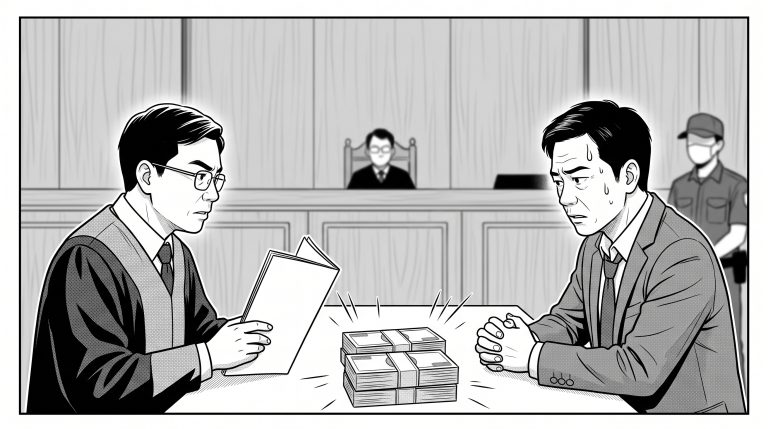
Upon receiving an indictment for fraud, money laundering, or nominee accounts, don't just look at the charges, the prosecutor's sentencing recommendations, or the last page of the indictment. The indictment means the case will be heard in court. What truly influences the preparation for the first trial is how the prosecutor combines the facts of the crime, the defendant's role, the flow of funds, and communication evidence. After receiving the indictment, you should immediately check each item: the facts of the crime identified in the indictment, the defendant's identified role, the evidence cited by the prosecutor, how the flow of funds is interpreted, how the communication records are interpreted, whether it's a guilty plea, and the scope of the guilty plea. Which facts are still in dispute? Is there any important evidence yet to be presented? The earlier you compare the indictment with the case file, the better you can avoid discovering crucial information that wasn't organized, discrepancies in previous statements, or differences between the prosecutor's assessment of the defendant's role and the actual situation only during the first preparation stage or on the trial date. Does being indicted necessarily mean being found guilty? No. Indictment is initiated when the prosecutor, after investigation, believes there is sufficient evidence to warrant prosecution…