Telephone
02-77093611
Line
@fdlaw
address
17th Floor, No. 180, Section 2, Dunhua South Road, Da'an District, Taipei City
Telephone
02-77093611
Line
@fdlaw
address
17th Floor, No. 180, Section 2, Dunhua South Road, Da'an District, Taipei City

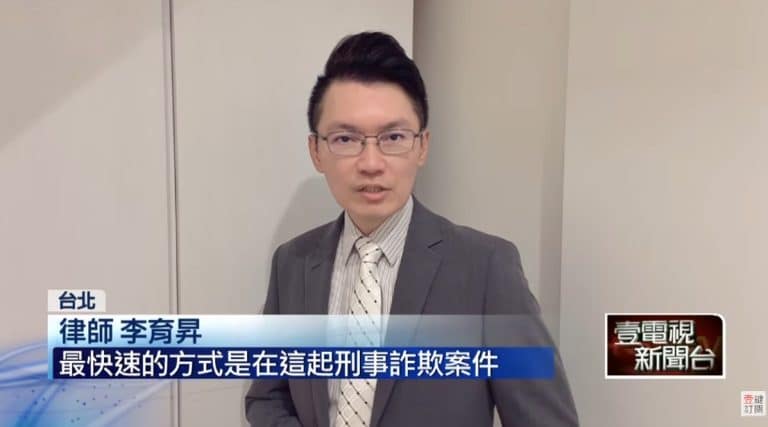
News Headline: Tzu Chi Defrauded of NT$1.06 Billion, No Lawsuit Filed, Netizens Outraged: How Were the Financial Statements Applied For? One News Reporter Chien Pin-chieh News Link: The controversy surrounding renowned lawyer Chen Yu-hsuan's alleged collaboration with a religious master to defraud the Tzu Chi Foundation of NT$1.06 billion under the guise of purchasing BNT vaccines continues to escalate. Many netizens are criticizing how this staggering NT$1 billion was accounted for in the financial statements. Experts have also raised questions, arguing that the failure to file a lawsuit immediately after the incident is unusual for a typical victim. In response, some lawyers have analyzed that filing a civil suit attached to the criminal case now would allow them to request the court to order the return of all funds. Lawyer Lee Yu-sheng of Fidelity Law Firm stated that Tzu Chi has complete legal channels to recover the NT$1.06 billion; the prosecution has already seized over NT$1 billion worth of gold…

Company executives, accountants, and the risks of falsified financial statements – focus here first. The Commercial Accounting Act not only affects accountants, but company executives who instruct, agree to, or actually participate in falsified records may also face criminal liability. False accounting documents, inaccurate ledgers, and false financial statements are often intertwined with issues of forgery, tax audits, company law, securities exchange law, or breach of trust and fraud. Before and after receiving documents from the IRS, investigation bureau, district attorney's office, or court, you should preserve vouchers, cash flow records, ledgers, emails, internal approvals, and decision-making records. The Commercial Accounting Act is not only for accountants; company executives may also be criminally liable. In the course of company operations, invoices, receipts, vouchers, ledgers, financial statements, cost and expense records, revenue recognition, and tax declarations may seem like the work of an accountant or bookkeeper, but if the content is false, the problem may not just be back taxes or fines, but may involve criminal liability under the Commercial Accounting Act. The Commercial Accounting Act regulates commercial accounting…

Overseas orders, export contracts, and international trade risks require careful consideration before signing. Don't just look at the purchase order and amount; payment, delivery, acceptance, risk transfer, governing law, and dispute resolution clauses all affect subsequent recovery. For high-volume exports, new customers, partial deliveries, or cross-border payment arrangements, the contracting parties, payment parties, receiving parties, and agency relationships should be confirmed first. If overseas customers default on payments, whether the contract clearly specifies jurisdiction, arbitration, place of payment, and evidentiary documents will directly affect the actual recovery rate. Having a purchase order doesn't guarantee safety; international trade risks must be controlled before shipment. When Taiwanese companies receive overseas orders, they most easily check the order amount, customer background, and delivery date. However, in international trade, the real risks are often not whether production is possible, but rather uncollectible payments, defects found upon delivery, misunderstandings of delivery terms, delays in sea and air freight, exchange rate fluctuations, export controls, unclear governing law, or disputes…

When reviewing OEM, ODM, and contract manufacturing contracts, the real focus should be on risk allocation. Contract manufacturing contracts shouldn't just state the price and delivery date; specifications, acceptance procedures, liability for defects, delivery delays, confidentiality, and intellectual property ownership all need to be specified. The client and the contract manufacturer have different perspectives, leading to different focuses in contract review; the transaction model should be confirmed first before deciding on the terms. When mold development, design deliverables, overseas orders, bulk purchasing, brand licensing, or trade secrets are involved, a business lawyer's review is recommended before signing. Contract manufacturing contracts are not just about quotes and delivery dates; the real risks lie in the details. Common contract manufacturing collaborations for Taiwanese companies include OEM, ODM, component processing, electronics manufacturing, food contract manufacturing, cosmetics contract manufacturing, machinery processing, and brand contract manufacturing. Many companies, when negotiating contract manufacturing agreements, first confirm the unit price, quantity, and delivery date, but when disputes arise, the key issues are usually unclear specifications and ambiguous acceptance standards…

News Headline: Free Legal Consultation Takes a Turn! Lawyer Sues for Public Insult After Woman Throws Tea at Him - FTV News News Link: This article focuses on the fact that while free legal consultations can help people clarify the direction of their cases, they are not a complete legal representation, nor are they a place to vent emotions. If dissatisfied with the consultation results, the correct approach is to seek a second opinion or report the matter to the organizer. Responding to dissatisfaction with insults, threats, throwing drinks, or physical violence may turn the original legal issue into new civil or criminal liability. The Function and Boundaries of Free Legal Consultation: Free legal consultation is the first point of entry for many people when encountering legal problems. Divorce, debt, car accidents, fraud, labor disputes, contract disputes, criminal cases—many people initially don't know if they are in the right, whether to file a lawsuit, whether they will be sued, or what to do next…