Telephone
02-77093611
Line
@fdlaw
address
17th Floor, No. 180, Section 2, Dunhua South Road, Da'an District, Taipei City
Telephone
02-77093611
Line
@fdlaw
address
17th Floor, No. 180, Section 2, Dunhua South Road, Da'an District, Taipei City


When accused of fraudulent transactions or inflated revenue, first investigate five lines of evidence: 1. Were the goods or services actually fulfilled? 2. Are the orders, shipments, receipts, and invoices consistent? 3. Where did the customer's payments originally come from? 4. Did the funds, goods, or profits flow back to the original entity? 5. Who decided on the transaction, who decided on the accounting entries, and who actually knew about the irregularities? In cases of significant financial misrepresentation, "fraudulent transactions," "circular transactions," and "inflated revenue" are the most frequently used terms by prosecutors and investigators, and they are also the terms that most easily make the parties involved nervous. However, from a criminal law perspective, these terms themselves are not the end point for establishing a crime. What really needs to be investigated is: Did the transaction have a genuine commercial purpose? Did the customer actually exist? Were the goods shipped? Were the services provided? Were they received? Why were the invoices issued? Were the accounts receivable actually collected? Where did the payments come from? Did the funds later return to the original company or related party?

In cases of significant financial statement misrepresentation, six layers must be dissected first: 1. Is the original transaction genuine? 2. Do the invoices, orders, shipments, and receipts match? 3. How are accounting vouchers and ledgers recorded? 4. Who decides on the accounting treatment and revenue recognition? 5. Which information ultimately enters the legally required financial reports? 6. How much did each director, finance, and accounting staff know and how much were involved? When listed companies are involved in financial statement misrepresentation cases, investigators usually don't just present a financial statement and ask, "Is this number wrong?" A genuine investigation often traces back to the source: From which order did this revenue originate? Was there a real customer? Were the goods shipped? Were they received? Why was the invoice issued? Were the accounts receivable actually collected? Were the funds circulated back by related parties or other companies? Who requested the accountant to record the transaction? Who decided on the timing of revenue recognition? What did the CFO know? The directors…

When accused of embezzling company assets, first address these five questions: 1. Is the prosecution arguing for irregular transactions, special breach of trust, or general breach of trust/embezzlement? 2. What were the defendant's actual positions and decision-making authority? 3. Why did the company conduct this transaction, and was there a reasonable business purpose? 4. What consideration did the company actually receive, and how much real damage was incurred? 5. What benefits did the defendant or a third party gain, and where did the funds ultimately flow? "Company embezzlement" is a common accusation in major financial criminal cases. However, from a criminal law perspective, "embezzlement" is not a single crime. Related issues can be found in the Securities and Exchange Act's section on major crimes and criminal defense. What prosecutors might actually argue often includes: irregular transactions under Article 171, Paragraph 1, Subparagraph 2 of the Securities and Exchange Act; special breach of trust or embezzlement of company assets under Article 171, Paragraph 1, Subparagraph 3; criminal breach of trust; business misappropriation; commercial accounting law; and false financial statements…

In major criminal cases under the Securities and Exchange Act, do not confuse all charges: Financial reporting fraud → Original trading, financial processes, informed and intentional stock price manipulation → Account control, order placement patterns, funds, price, and market intent. Insider trading → Material news, specific timing, time of knowledge, and trading time. Unconventional trading → Commercial purpose, trading conditions, business practices, and material damage to the company. Special breach of trust → Identity, position, profit motive, breach of duty, and company damage. One of the most dangerous aspects of major criminal cases under the Securities and Exchange Act is that different crimes often appear simultaneously in the same search warrant, indictment, or case file. For procedural handling, please refer to the Securities and Exchange Act Search, Interview, and Major Financial Criminal Case Defense. For example, after a listed company is searched by prosecutors, the case may simultaneously involve: Financial reporting fraud; Stock price manipulation; Insider trading; Unconventional trading; Special breach of trust; Commercial Accounting Act; Criminal Law…
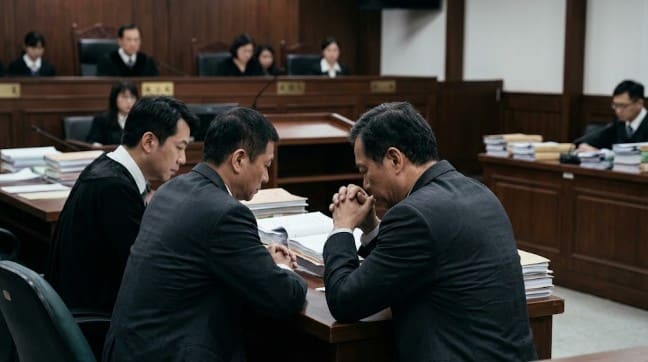
In major financial cases where detention is requested, the detention hearing must first answer five questions: 1. Has the suspicion of the crime truly reached a serious level? 2. Who exactly is the alleged collusion target mentioned by the prosecution? 3. Have the cell phones, computers, ledgers, and financial data been secured? 4. Is there concrete evidence of escape, rather than just an inference based on the severity of the sentence? 5. Can bail, restrictions on residence, restrictions on leaving the country or going to sea, or prohibitions on contact with specific individuals be used in place of detention? After a major securities transaction law case is investigated and the investigation bureau searches the premises, the process often proceeds very quickly. For relevant procedures, please refer to Securities Transaction Law Search, Interrogation, and Defense in Major Financial Criminal Cases. The typical procedure involves: a search of the company or residence in the morning; being taken to the investigation bureau for questioning during the day; being transferred to the district prosecutor's office for further questioning in the evening; the prosecutor applying for detention after questioning; and then the court potentially holding a detention hearing within a very short time. For family members, the most direct question is usually: "Why is someone being detained for just a company or stock case?"
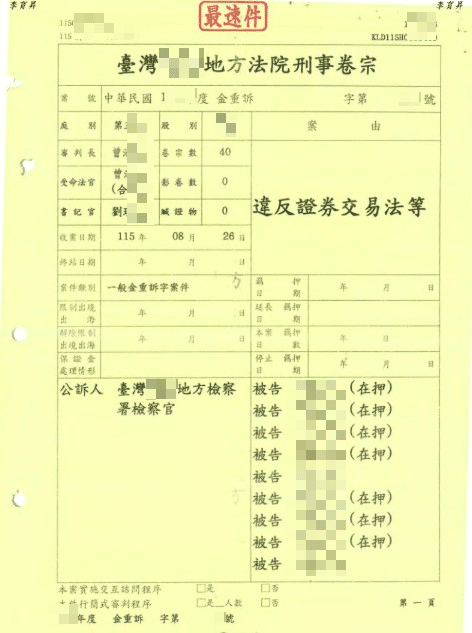
If you are suspected of involvement in a major securities transaction law case, do these five things first: 01. Preserve the investigation bureau's notices, subpoenas, search warrants, and lists of seized items; 02. Do not delete your mobile phone, computer, or company data yourself; 03. Do not discuss the content of your interrogation or agree on a unified statement with other defendants; 04. First confirm your actual role in company decision-making, accounting, transactions, and funds; 05. If detention proceedings have already been initiated, immediately prepare evidence of seized items, a fixed address, work and family, and alternative detention options. The biggest difference between securities transaction law criminal cases and general criminal cases is often not just the "more severe penalties," but rather the fact that the following common procedures may occur simultaneously from the outset: Multiple searches by the investigation bureau in major securities transaction law cases; Seizure of company and residence; Copying of mobile phones, computers, and electronic data; Simultaneous questioning of company directors, financial officers, accountants, shareholders, or transaction-related persons; Large amounts of bank transactions, securities accounts, financial statements, and company documents…